


 support@thepetbotique.com
Table of Contents
- The Real Cost of an Expensive Pet Bed
- How to Choose a Durable Pet Bed
- Best Orthopedic Beds for Senior Dogs
- Pet Bed Maintenance Tips That Extend Lifespan
- When to Invest in a Premium Bed
- Environmental Impact and Sustainability
- Conclusion
- Frequently Asked Questions
Last Updated: September 17, 2026
The Real Cost of an Expensive Pet Bed
The question of whether expensive pet beds are worth it comes down to one calculation: cost per year of use. A bed that costs more upfront but survives four years often costs less annually than a cheap bed replaced every six months. This guide breaks down the math, the materials, and the health factors that separate genuine orthopedic value from marketing markup.
Cheap beds fail in predictable ways. The filling clumps, the cover tears at the seams, and the waterproof lining gives out after a few washes. When you replace that bed twice a year, the "savings" disappear fast.
Below, we'll show you exactly how to evaluate construction, measure for the right fit, and decide when a premium bed earns its price. The framework we cover has one goal: helping you stop guessing and start buying once.
How to Choose a Durable Pet Bed
A durable pet bed is one where the cover, stitching, and foam core each hold up independently under daily use. The cover takes the abuse, the stitching holds it together, and the foam keeps its shape.
Most buyers evaluate beds by how they look in the photo. That's backwards. The three components that determine lifespan are material composition, stitching quality, and foam density.
Material Composition and Stitching Quality
Oxford cloth and heavy canvas resist scratching far better than thin microfiber. Look for double-stitched seams at stress points, since single stitching is the first thing to fail on a bed that gets pawed and circled before every nap.
Waterproof lining matters more than most owners realize. Accidents, drool, and wet fur all soak through a cheap cover and rot the foam from the inside.
Signs of a Low-Quality Bed
Watch for these red flags before you buy:
- Filling that shifts audibly when you press it
- Seams with visible gaps or loose thread ends
- A cover that cannot be removed for washing
- Foam that stays compressed after you release pressure
- Chemical odors that linger after airing out
Any one of these signals a short replacement cycle ahead.
Best Orthopedic Beds for Senior Dogs
The best orthopedic bed for a senior dog is one that distributes weight evenly and does not sink under the dog's heaviest pressure points. For aging joints, that means thick, supportive foam and a low, easy entry height.
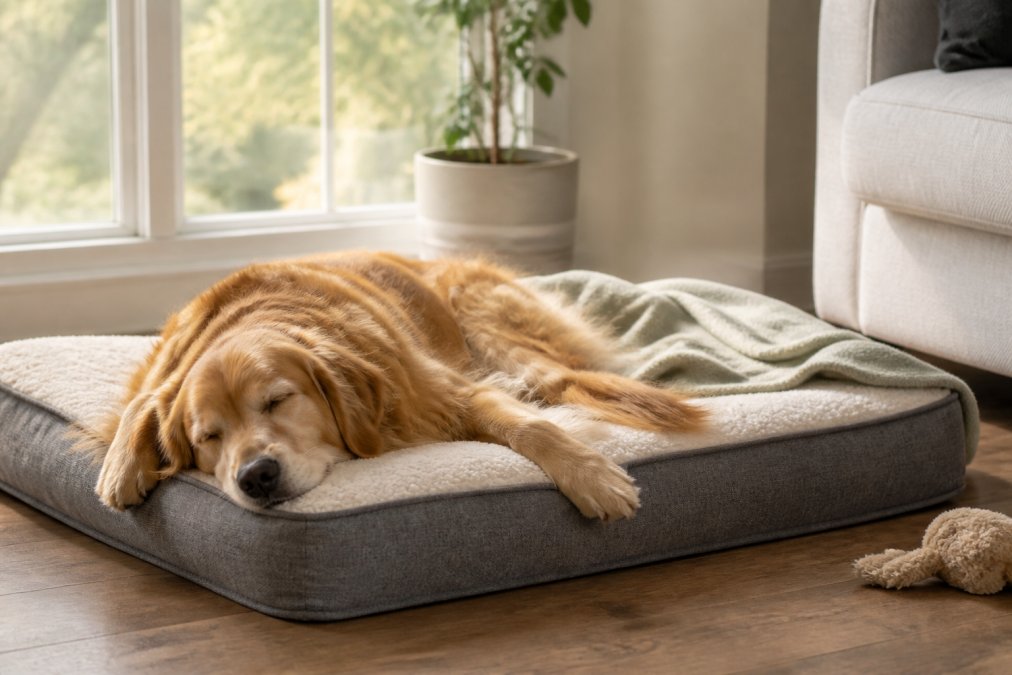
The Washable Large Orthopedic Dog Bed uses a thick sponge foam base that prevents sinking, with a waterproof lining and a scratch-resistant Oxford cloth cover.

| Bed | Key Material | Best For | Price |
|---|---|---|---|
| Washable Large Orthopedic Dog Bed | Sponge foam, Oxford cloth | Joint support, seniors | $120.99 |
| Calming Donut Dog Bed | Faux fur, donut shape | Anxious dogs, curling sleepers | $84.99 |
| Plush Dog Crate Bed | Spandex, anti-slip base | Crate and kennel use | $94.99 |
| Soft Dog Beds For Large Dogs | 100% cotton | Travel and portability | $62.99 |
| Plush Winter Dog Bed | Plush fabric | Cold-weather warmth | $39.99 |
Pet Bed Maintenance Tips That Extend Lifespan
Maintenance is where the cost-per-year math is won or lost. A bed that gets washed correctly can outlast an identical bed that gets washed carelessly by two or three years, which is the difference between a $30 annual cost and a $90 one.

Washing Without Destroying the Foam
Most removable covers handle a gentle machine cycle in cold water. Hot water is the enemy: it shrinks cotton covers, breaks down waterproof laminates, and accelerates foam breakdown if any moisture reaches the core. Check the label first, but cold water and a mild detergent is the safe default.
The Drying Rule That Saves Foam Cores
Foam breaks down from moisture, not from your dog. If the cover goes back on while either piece is still damp, you are trapping humidity against the core, where it feeds mildew and degrades the cell structure from the inside. Let both pieces air-dry completely, even if it takes a full day in humid weather.
Washable Large Orthopedic Dog Bed →
The Weekly and Monthly Habits
- Weekly: Vacuum loose hair off the cover before it works into the seams. Hair that reaches the stitching acts like grit and abrades the thread from the inside.
- Monthly: Rotate the bed 180 degrees if your dog always sleeps in the same spot. Uneven compression is what makes one side of a foam core collapse first.
- Quarterly: Air the foam core outdoors in shade, direct sun can degrade some foams, for a few hours to release trapped moisture.
- Immediately: Spot-clean accidents the same day. Urine and drool break down waterproof linings faster than any amount of washing.
Keep a Spare Cover
A spare cover is the cheapest insurance in this category. It lets you wash one while the other is in use, so you are never tempted to rush the drying step. It also means a torn cover does not force you to replace the entire bed, you replace the cover and keep the foam, which is the expensive part.
When to Invest in a Premium Bed
The decision is not about price. It is about whether the bed delivers a measurable function your dog needs. That is the line between marketing luxury and functional luxury.
The Cost-Per-Use Formula
Use this before you buy anything:
Cost per use = Purchase price ÷ (Expected lifespan in years × 365)
Run the numbers on a typical comparison:
| Scenario | Price | Lifespan | Cost per year | Cost per day |
|---|---|---|---|---|
| Budget bed replaced twice a year | $40 × 2 | 6 months each | $80 | $0.22 |
| Mid-tier bed | $95 | 2 years | $47.50 | $0.13 |
| Premium orthopedic bed | $120.99 | 4 years | $30.25 | $0.08 |
Functional Triggers That Justify the Upgrade
A premium bed earns its price when at least one of these is true:
- Veterinary-grade orthopedic need. If your veterinarian has flagged hip dysplasia, arthritis, or post-surgical recovery, the bed is no longer a comfort purchase. It is part of the treatment plan, and foam density is the active ingredient. A bed that bottoms out under the dog's weight provides no support regardless of how thick the listing claims it is.
- Body weight over 50 pounds. Foam compresses under load. A bed rated for a 20-pound dog will flatten under a 70-pound dog within months, which is why large-breed beds use higher-density cores and reinforced seams.
- Destructive behavior. Diggers and chewers destroy covers, not foam. If your dog paws at the bed before circling, the cover and stitching are the failure point, and a replaceable-cover design extends the life of the expensive part.
- Replacement history. If you have bought two or more beds in the past 12 months, you are already paying premium prices in installments. Consolidating into one durable bed usually costs less over the same window.
When a Basic Bed Is the Right Call
Small dogs under 20 pounds, gentle sleepers, and dogs who use the bed only for supervised lounging rarely stress the materials enough to justify a premium core. A basic bed that stays dry and gets washed regularly can last years in that environment. The upgrade math changes the moment weight, age, or behavior enters the picture.
Environmental Impact and Sustainability
Longer-lasting beds create less waste, and that's the most direct sustainability argument in this category. Every replacement bed you avoid keeps foam, fabric, and packaging out of a landfill.
Conclusion
Deciding whether expensive pet beds are worth it comes down to your dog's size, health, and habits. For seniors, large breeds, and heavy chewers, the cost-per-year math favors a well-built bed every time.
Frequently Asked Questions
How much should you spend on a dog bed?
Most quality beds range from $40 to $130. The Washable Large Orthopedic Dog Bed is $120.99, the Calming Donut Dog Bed is $84.99, the Plush Dog Crate Bed is $94.99, the Soft Dog Bed is $62.99, and the Plush Winter Dog Bed is $39.99. Spending more upfront often means lower cost-per-year because the bed lasts longer.
Do senior pets specifically benefit from expensive orthopedic beds?
Yes. Orthopedic beds with supportive foam, like the Washable Large Orthopedic Dog Bed, provide joint support and pressure relief that helps aging dogs with arthritis or joint discomfort. The thick foam prevents sinking and supports weight distribution, which is especially important for senior dogs who sleep more hours per day and need consistent support.
How long should a premium pet bed realistically last?
A well-made bed with durable materials and removable washable covers can last two to three years with proper care. Beds with scratch-resistant Oxford cloth and waterproof lining resist wear better than budget options. Following pet bed maintenance tips like hand washing and regular vacuuming extends the replacement cycle significantly.
Are expensive pet beds easier to clean and maintain?
Generally, yes. Beds with removable zippered covers and machine-washable materials simplify cleaning. The Calming Donut Dog Bed and Plush Dog Crate Bed both have removable machine-washable covers. The Washable Large Orthopedic Dog Bed recommends hand washing to prolong foam life. Washable covers and waterproof linings reduce odors and allergens.
What features distinguish luxury pet beds from budget options?
Luxury beds typically use higher memory foam density, durable materials like Oxford cloth, hypoallergenic fabrics, and reinforced stitching. Budget beds often use thin filling that flattens quickly. Premium construction also includes non-slip bottoms, waterproof linings, and breathable fabric that supports pet ergonomics and sleep quality.


