


 support@thepetbotique.com
Table of Contents
- Why Clean Pet Water Bowls Matter for Your Pet's Health
- What You'll Need for Chemical-Free Cleaning
- How Often to Wash Pet Water Bowls (and When to Wash More)
- Step-by-Step: Daily Washing With Hot Water and Soap
- How to Remove Biofilm From a Dog Water Bowl
- The Best Material for Pet Water Bowls
- How to Clean a Pet Water Fountain (Including Filters)
- Common Mistakes That Keep Bowls Dirty
- Frequently Asked Questions
Last Updated: October 7, 2026
Why Clean Pet Water Bowls Matter for Your Pet's Health
A water bowl that looks clean can still be coated in a thin layer of bacteria. Learning how to keep pet water bowls clean without harsh chemicals protects your pet without leaving risky residue behind.
That slick coating is called biofilm, and it builds up within hours of fresh water sitting out. Pets that drink from a dirty bowl can pick up germs, lose interest in drinking, or develop irritated skin around the mouth and chin.
What You'll Need for Chemical-Free Cleaning
You don't need bleach or specialty sprays to keep pet water bowls clean. Gather:
- A dedicated bowl brush or sponge used only for pet dishes
- Unscented dish soap or plain castile soap
- Hot running water
A dedicated brush matters more than people think, a sponge that also cleans your dinner plates can transfer grease and food residue onto your pet's water dish. Skip anything with added fragrance, dye, or antibacterial agents; plain soap and hot water handle the job.
CDC guidance on keeping pets and people healthy at home
How Often to Wash Pet Water Bowls (and When to Wash More)
Pet water bowls should be washed daily with hot water and soap. A quick rinse isn't enough, because biofilm starts forming within hours.
Some households need to wash even more often:
| Household Situation | Wash Frequency |
|---|---|
| One calm cat, indoor only | Once daily |
| Multiple pets sharing a bowl | Twice daily |
| Dog that drools heavily | After every meal |
| Pet with allergies or skin issues | Twice daily |
| Raw-fed or messy eater | After every meal |
| Outdoor or farm pets | Twice daily |
A good rule: if the bowl feels slick or smells off, wash it right away, no matter what the schedule says.
Step-by-Step: Daily Washing With Hot Water and Soap
Daily washing takes about two minutes once you have a rhythm. The goal is to remove the biofilm layer before it hardens into a film soap alone can't lift.
- Empty the bowl completely, the freshest water poured over a slimy bowl is still contaminated.
- Fill with hot water and add one drop of unscented dish soap or plain castile soap. Excess soap is the leading cause of residue.
- Scrub the inside, rim, and outside with your dedicated brush. The rim matters because pets' tongues and chins rest there.
- Work the bottom and the seam where the wall meets the base first, that's where biofilm anchors.
- Rinse under hot running water for at least 15 seconds, rotating the bowl so every interior surface gets direct flow.
- Wipe dry with a clean towel or set it upside down on a drying rack.
- Refill with fresh, cool water and set it back in its usual spot.
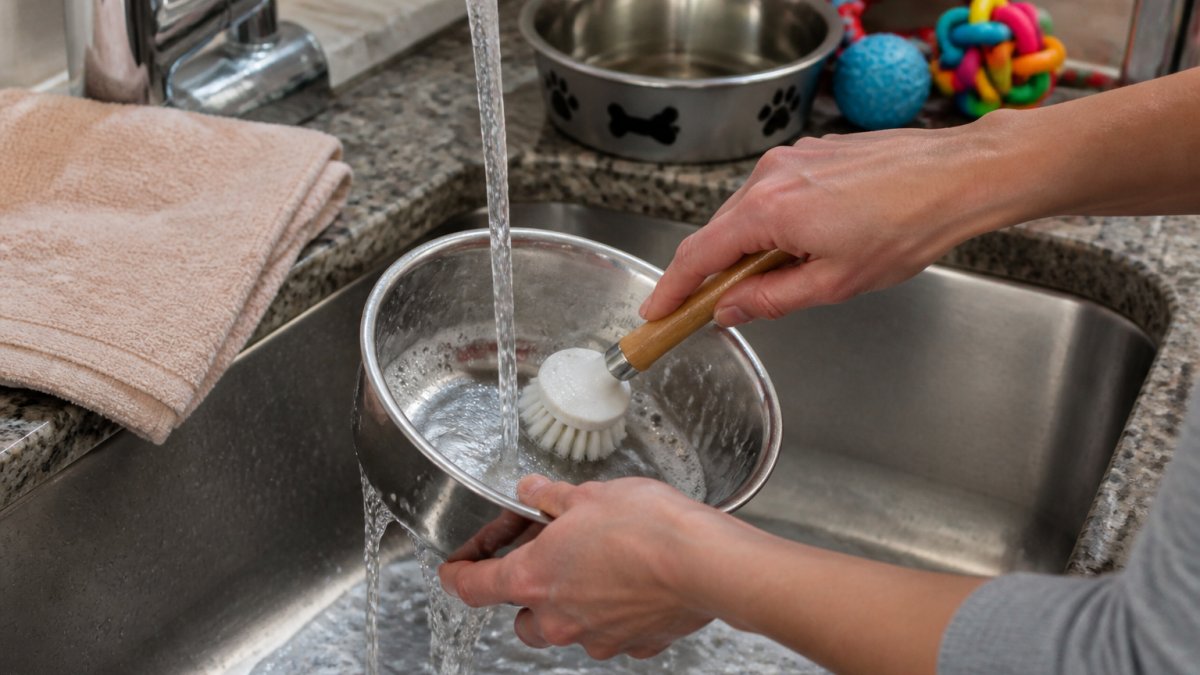
Scrubbing and Rinsing to Remove All Soap Residue
Soap residue is the most common mistake, and even a trace amount can change the taste of the water enough that a cat stops drinking.
Rinse until the water runs clear and the bowl no longer feels slippery, then rinse once more. Hot water breaks down soap faster than cold, so if your tap runs lukewarm, give it an extra 10 seconds.
What to Use Instead of Harsh Chemicals
You do not need bleach, ammonia, or antibacterial sprays to keep a water bowl clean, and several common household cleaners are genuinely dangerous around pets even after rinsing. Safe options:
- Unscented dish soap or plain castile soap, cuts grease and biofilm without leaving fragrance or dye behind.
- White vinegar, breaks down hard-water minerals and has mild antimicrobial action. Dilute it and rinse thoroughly.
- Baking soda, a gentle abrasive for stubborn film and a deodorizer for bowls that smell off.
Substances to avoid around pet water bowls:
- Bleach and chlorine cleaners, residue can irritate a pet's mouth and digestive tract.
- Ammonia-based glass and surface cleaners, the fumes alone are harsh for small animals.
- Antibacterial hand soaps and dish liquids, the added antimicrobial agents leave residue and aren't necessary for a bowl that gets washed daily.
Never mix vinegar with bleach or hydrogen peroxide, the combinations release irritant gases.
CDC guidance on keeping pets and people healthy at home
How to Remove Biofilm From a Dog Water Bowl
Biofilm is a sticky layer of bacteria that clings to bowl surfaces, and regular soap and water won't always remove it. You need friction and a mild abrasive:
- Rinse the bowl with hot water.
- Sprinkle baking soda over the slimy areas.
- Add a few drops of unscented soap.
- Scrub firmly with your dedicated brush for 30 seconds.
- Rinse thoroughly and check with your fingers.
- Repeat if the surface still feels slick.
If the slime comes back within a day, the bowl likely has scratches holding bacteria. In that case, replace it. A scratched bowl will never get fully clean.
Tackling Stubborn Mineral Rings and Buildup
Mineral rings from hard water look like a white, chalky line inside the bowl. Fill the bowl with equal parts white vinegar and water, let it sit 15 to 30 minutes, then scrub and rinse well. For heavy buildup, apply a paste of baking soda and water, let it sit 10 minutes, then scrub and rinse thoroughly.
ASPCA poison control guidance on household products and pets
The Best Material for Pet Water Bowls
Stainless steel is the best material for pet water bowls because it's nonporous, scratch-resistant, and easy to sanitize. How the common materials compare:
- Stainless steel: Durable, nonporous, dishwasher-safe, holds up to daily scrubbing
- Ceramic: Easy to clean if glazed and lead-free, but can chip and crack
- Glass: Nonporous and hygienic, but heavy and breakable
If you use ceramic, check that it's labeled lead-free, older or decorative bowls may contain lead glaze that can leach into water. Plastic is the one to avoid for water: it scratches, holds biofilm, and can cause chin acne in cats.
How to Clean a Pet Water Fountain (Including Filters)
A fountain is not a self-cleaning bowl. It's a small plumbing system, and every part, reservoir, lid, spout, pump housing, impeller, and filter, collects biofilm at a different rate. Most owners clean the reservoir and forget the pump, where slime and mineral scale do the most damage.
How Often to Clean Each Part
| Component | Clean | Replace |
|---|---|---|
| Reservoir and lid | Every 3-4 days | When cracked or scratched |
| Spout and drinking surface | Every 3-4 days | , |
| Pump housing and impeller | Weekly | When flow drops and cleaning doesn't restore it |
| Filter | Rinse weekly | Every 2-4 weeks, or sooner if flow slows |
| Tubing (if removable) | Weekly | When it discolors or stiffens |
Households with multiple pets, heavy droolers, or outdoor access should move everything up one step, reservoir every other day, pump twice a week.
Step-by-Step Fountain Cleaning
- Unplug the fountain before you touch anything.
- Take it apart completely, lid, spout, filter, and any removable tubing.
- Set the filter aside and rinse it under cool water; don't scrub it or you'll destroy the media.
- Wash the reservoir, lid, and spout with hot water and a drop of unscented soap, using a bottle brush for the corners.
- Scrub the pump housing with a small brush, especially the intake grille and impeller well, the most common place for slime to jam the motor.
- Rinse every part thoroughly, especially the pump.
- Soak mineral buildup on the spout and pump in equal parts white vinegar and water for 20 minutes, then rinse well.
- Dry the parts, install a fresh filter, and reassemble.
- Run the pump under clean water for a minute before putting the fountain back in service.
Filter Changes and Flow as a Signal
A clogged filter slows the flow, and slow flow lets biofilm build up in the reservoir. Change the filter every two to four weeks, and sooner if:
- The water flow visibly slows or becomes uneven.
- The water starts to smell off even after a full clean.
- You see debris or discoloration on the filter media.
If you clean the pump and the flow still won't recover, the impeller is likely worn or scaled beyond what vinegar can fix. At that point, replace the pump rather than the whole fountain.
Fountain Materials and What to Avoid
Stainless steel and ceramic fountains are easiest to keep clean because they're nonporous and don't scratch. Plastic fountains scratch, hold biofilm, and can contribute to chin acne in cats. Avoid fountains with narrow, non-removable tubing, if you can't reach it with a brush, you can't clean it.
ASPCA poison control guidance on household products and pets
Common Mistakes That Keep Bowls Dirty
Most dirty bowls aren't dirty because of laziness, but because of small habits that add up:
- Topping off the bowl instead of emptying and washing it
- Using the same sponge for pet bowls and human dishes
- Skipping the rinse and leaving soap residue behind
Fix those habits and your routine gets easier. Keep a second bowl on hand so one can dry while the other is in use, and if your pet still avoids the water, try a different bowl material or a fountain.
When you're ready to upgrade, The Pet Botique carries durable, easy-to-clean pet essentials for both cats and dogs.
Frequently Asked Questions
How do I keep my dog's water bowl from getting slimy?
The slime is biofilm, a layer of bacteria and microorganisms that builds up when water sits in a bowl for hours. The fix is daily washing with hot water and soap, scrubbing the entire surface with a dedicated brush, and rinsing thoroughly. Refill with fresh water at least twice a day. If your dog drools heavily or eats before drinking, wash the bowl after each meal. Stainless steel and ceramic bowls resist biofilm better than scratched plastic, which traps bacteria in tiny grooves.
Can I clean pet water bowls with vinegar instead of harsh chemicals?
Yes. White vinegar is a safe, chemical-free option for periodic deep cleaning. Mix equal parts white vinegar and water, let it sit in the bowl for 10 to 15 minutes to break down mineral deposits and biofilm, then scrub with a dedicated brush and rinse thoroughly. The vinegar smell fades once the bowl dries. For daily cleaning, hot water and a small amount of dish soap work well. Never mix vinegar with bleach or other cleaners.
Can I wash my cat's bowls with my own dishes?
It is safer to wash pet bowls separately from human dishes, especially if your pet is sick or you want to avoid cross-contamination. Use separate utensils, sponges, or brushes for pet dishes. If you do use the same sink, wash and rinse pet bowls after human dishes, then sanitize the sink. A dedicated brush for pet bowls prevents bacteria from spreading between your pet's dishes and your family's plates.
How often should I clean a pet water fountain?
Disassemble and clean the fountain every two to three days. Take apart the pump, basin, and any fountain components, then scrub each part with hot soapy water and a dedicated brush. Rinse thoroughly to remove all soap residue. Replace the filter every two to four weeks, or sooner if you notice slime or reduced water flow. Refill with fresh water daily. Fountains with more parts need more frequent attention because biofilm hides in crevices.
Keeping a water bowl truly clean takes two minutes a day, and skipping it costs your pet more than most owners realize. A simple routine of hot water, unscented soap, and thorough rinsing handles almost everything. For the tougher jobs, baking soda and vinegar do the work without harsh chemicals. The Pet Botique makes it easy to stock up on durable, easy-to-clean bowls and pet care essentials, all in one place. Shop our collection and give your best friend the fresh, clean water they deserve.


