


 support@thepetbotique.com
Table of Contents
- Pet Parent vs Pet Owner Mindset Explained: What Actually Changes
- Pet Parent Meaning: The Nurturing Side of the Bond
- Pet Owner Meaning: Why the Legal Term Still Matters
- Pet Parent Responsibilities: Same Tasks, Different Framing
- Pet Parent Lifestyle: How the Identity Shows Up at Home
- Why Some People Reject Each Term
- How to Choose Your Preferred Terminology
- Frequently Asked Questions
Last Updated: October 14, 2026
Pet Parent vs Pet Owner Mindset Explained: What Actually Changes
The words people choose for themselves say a lot. A pet parent vs pet owner mindset is the clearest example in modern pet culture.
This guide from The Pet Botique breaks down what each word really means.
The short answer: pet parent describes a nurturing, emotional role. Pet owner describes a legal and practical one.
In practice, the two terms overlap more than people admit. A pet parent still pays the vet bill.
Pet Parent Meaning: The Nurturing Side of the Bond
Pet parent is a term for someone who sees their animal as a family member and themselves as a caregiver. It signals love, protection, and daily nurturing.
The word isn't new. It grew as pets moved from the yard to the bedroom. Many people now treat dogs and cats like children. They plan family outings around them. They buy birthday treats and themed apparel.
Where the Term Comes From
The shift tracks a broader change in how households view animals. Pets became companion animals rather than working animals. As that happened, the language changed to match.
What the Word Signals in Practice
Calling yourself a pet parent signals a few things:
- Emotional connection comes first
- Caregiving is a daily habit, not a chore
- The animal is part of the family unit
- Enrichment and well-being matter
That last point is where the mindset shows up in real choices. Pet parents tend to buy puzzle toys, cozy beds, and comfort items without thinking twice.
Pet Owner Meaning: Why the Legal Term Still Matters
Pet owner is the legal and practical term for the person responsible for an animal. It covers food, shelter, veterinary care, and any harm the animal causes. Where "pet parent" describes a feeling, "owner" describes a set of enforceable duties that follow the animal regardless of how the human feels about the label.
Ownership Language and Real-World Duties
Ownership language keeps the practical side in view. In most jurisdictions, the person listed on paperwork is the one the system holds accountable. That shows up in concrete places:
- Licensing and registration. Many municipalities require dogs to be licensed, and the license is issued to an owner, not a parent. Renewal notices, tags, and fines all route to that name.
- Rabies vaccination requirements. State and local health codes typically require current rabies vaccination for dogs and often cats, and the certificate is tied to the owner of record.
- Leash, restraint, and bite laws. When an animal bites someone, liability generally falls on the owner. Some states apply a "one-bite" standard, while others hold owners strictly liable for certain breeds or prior incidents.
- Housing and rental rules. Leases, HOA covenants, and condo bylaws almost always use "owner" or "pet owner," and pet deposits, weight limits, and breed restrictions are enforced against that person.
- Travel and transport. Airline pet policies, interstate health certificates, and border documentation list an owner or responsible party.
For official paperwork, guidance from the American Veterinary Medical Association and most shelters still use "owner" because it carries clear responsibility.
Where the Two Terms Actually Diverge
A useful way to see the difference is to ask what each term is doing in a given sentence:
| Context | Term that fits | Why |
|---|---|---|
| Veterinary intake form | Owner | Identifies who authorizes treatment and pays |
| Apartment lease | Owner | Ties liability and deposits to a named party |
| Dog park conversation | Parent or owner | Either works; social, not legal |
| Bite incident report | Owner | Determines liability and insurance response |
| Holiday card caption | Parent | Signals affection, no legal weight |
Affectionate language does not usually change legal responsibility, decision-making authority, or duties such as licensing and veterinary care. A person can call themselves a pet parent every day and still be the legal owner the moment a form, a fine, or a court date appears.
Pet Parent Responsibilities: Same Tasks, Different Framing
Here's the part most debates miss: the to-do list barely changes. Pet parent responsibilities and pet owner duties cover the same ground.
| Daily Task | Pet Owner Framing | Pet Parent Framing |
|---|---|---|
| Feeding | Meets a basic need | Makes a special meal |
| Vet visits | Required care | Health check for family |
| Playtime | Exercise | Quality bonding time |
| Grooming | Hygiene | Spa day for the pet |
| Shopping | Restocking supplies | Picking a fun treat |
The tasks are identical. Only the story around them changes.
Everyday Care, Vet Visits, and Enrichment
Enrichment is where the pet parent mindset really shows. Boredom is a common problem for dogs and cats left alone during the workday. Interactive toys, puzzle feeders, and comfy spots to nap all help.
Many pet parents plan the day around the animal. They schedule walks, set up play sessions, and rotate toys to keep things fresh. That's caregiving in action, whatever you call it.
Pet Parent Lifestyle: How the Identity Shows Up at Home
A pet parent lifestyle is easy to spot once you know the signs. It shows up in the home, the calendar, and the shopping cart.
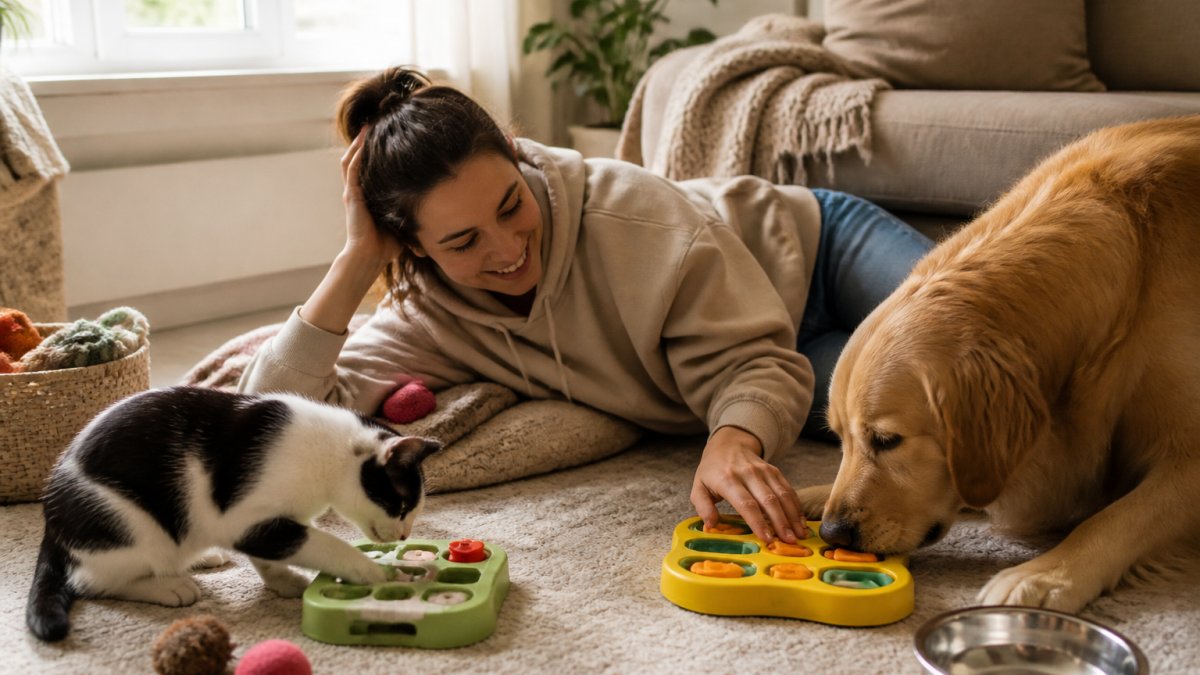
Common signs include:
- Beds and blankets in every room
- Toys stored in a basket, not a box
- Themed apparel and matching accessories
- Family outings that include the pet
- A spot on the couch that's always theirs
None of this is required. It's about identity. People who call themselves pet parents tend to spoil their animals more, and they enjoy doing it.
That's where a store like The Pet Botique fits in. Our cozy beds are built for exactly this kind of household.
Why Some People Reject Each Term
Not everyone likes the labels, and the reasons are worth hearing. The pushback usually comes from one of four places: how the word frames the animal, how it frames the human, how it lands in public, and how well it fits the actual relationship.
Why "Owner" Gets Rejected
Some dislike pet owner because it sounds cold. It frames a living companion as property, and property language carries real baggage, historically, animals were legally classified as chattel, and some people hear that echo every time the word is used. Others object on principle: they feel a sentient being should not be "owned" at all, even if the law says otherwise.
Why "Pet Parent" Gets Rejected
Others reject pet parent for the opposite reason. They say it goes too far. A dog is not a child, and the parent-child relationship doesn't quite fit. Common objections include:
- Anthropomorphism. Attributing human motives to an animal can lead to misread signals, a dog who is resource-guarding is not being "stubborn," and a cat who hides is not "giving the silent treatment."
- Boundary blurring. Some worry the term encourages treating animals as substitutes for human relationships, which can complicate grief, life transitions, and household decisions.
- Care-quality assumptions. There is no consistent evidence that people who say "pet parent" provide better or worse care than people who say "owner." The label tracks identity, not outcomes.
- Species mismatch. The parent framing fits dogs and cats more naturally than it fits reptiles, fish, birds, or small mammals, where caregiving looks more like habitat management than child-rearing.
Where the Parent-Child Analogy Holds and Where It Breaks
The analogy is useful in some places and misleading in others. It holds up when it comes to:
- Dependency. Young, ill, or senior animals rely on a caregiver for basics.
- Routine. Feeding, medication, and enrichment schedules mirror the structure of caring for a child.
- Advocacy. The caregiver speaks for the animal in medical and housing decisions.
It breaks down when it comes to:
- Developmental trajectory. A puppy matures in months, not decades, and never becomes an independent adult in the human sense.
- Communication. Animals rely on scent, posture, and species-specific signals that do not map to human language or reasoning.
- Legal standing. A child has rights and a future legal identity; an animal does not.
- Lifespan and expectations. The relationship is typically shorter and structured differently than a parent-child bond.
A Middle Option: Pet Guardian
There's a middle option too: pet guardian. It signals care and responsibility without claiming parenthood, and some municipalities and animal welfare organizations have adopted it in ordinances and intake forms. research on the human-animal bond from the National Institutes of Health shows the emotional tie is real regardless of which word a person uses.
How Terminology Lands in Different Settings
The same person may use different words in different rooms. A common pattern is:
- At home or with friends: "pet parent," "my boy," or the animal's name.
- At the vet or shelter: "owner," because that is what the form asks for.
- At the leasing office: "owner," because that is what the lease enforces.
- On social media: either, often mixed within the same post.
That is not hypocrisy. It is code-switching, and it is how most people navigate a term set that has no single correct answer.
How to Choose Your Preferred Terminology
There's no wrong answer here, but a quick self-check can help. Ask yourself what you want the word to do.
- Want to signal love and family? Use pet parent.
- Want to signal duty and law? Use pet owner.
- Want something neutral? Use pet guardian.
- Want to avoid the debate? Just use your pet's name.
Preferred terminology is personal. It can also shift by setting. You might say "pet parent" with friends and "owner" on a vet form. That's normal, and it's not hypocrite behavior.
The mindset is what matters most. Whether you call yourself a pet parent or a pet owner, your animal needs the same things: food, safety, vet care, and time with you.
Frequently Asked Questions
What is the difference between a pet parent and a pet owner?
A pet owner is the legal and practical term: the person responsible for food, shelter, veterinary care, and compliance with local animal rules. A pet parent describes the same role with a relational, nurturing lens, emphasizing emotional connection and daily caregiving. In practice, most people are both. The words signal mindset, not a different set of duties. You can file adoption paperwork as an owner and still think of yourself as a parent at home.
Do pet parents treat their pets differently from pet owners?
The label alone does not change care. What changes is how people describe that care. Someone using pet parent language often talks about enrichment, comfort, and family integration, while owner language tends to focus on responsibility and provision. Both groups still buy food, schedule veterinary care, and handle daily routines. The real difference shows up in how much they spoil their pets, not in whether basic needs get met.
Can you be both a pet parent and a pet owner?
Yes, and most people are. Ownership covers the legal and practical side: adoption records, licensing where required, veterinary consent, and responsibility for the animal's well-being. Pet parenting covers the emotional and caregiving side: bonding, nurturing, and treating a dog or cat like a family member. Switching between the terms depending on context is normal and practical. Use owner language at the vet or shelter and parent language at home.
Why do some people dislike the term pet parent?
Some see the parent-child analogy as an overreach, arguing that a dog or cat is a companion animal, not a child, and that the comparison can blur the line between animal welfare and human family obligations. Others find it sentimental or marketing-driven. The objection is usually about accuracy, not affection. People who prefer pet owner or pet guardian often care just as deeply; they simply want language that matches the legal and practical reality of caring for an animal.
The real challenge isn't picking a label. It's giving your dog or cat the daily care, comfort, and enrichment they deserve. At The Pet Botique, we make that easier with interactive toys that fight boredom, cozy beds and blankets for deeper rest, and durable essentials built to last. Buy any two items and save 10%, plus free shipping on orders over $65. Get started with The Pet Botique and give your companion the care their title, whatever it is, has always promised.


