


 support@thepetbotique.com
Table of Contents
- Why PetLife Shoppers Are Looking for Durable Dog Toys Alternatives
- Quick Comparison: Durable Dog Toys for Power Chewers
- Indestructible Dog Toys for Power Chewers: What Actually Holds Up
- How to Choose Safe Dog Toys: Materials, Toxicity, and Wear Checks
- Rubber vs. Nylon vs. Rope vs. Plush: Which Survives Your Dog
- Age-Specific Durability: Puppies, Adults, and Seniors
- Enrichment Toys That Beat Boredom (and Destructive Chewing)
- Repair, Cleaning, and Replacement Cycles for Tough Toys
- Frequently Asked Questions
Last Updated: September 10, 2026
Why PetLife Shoppers Are Looking for Durable Dog Toys Alternatives
Pet owners who once stocked up on bargain toys are now hunting for a PetLife alternative because the cheap stuff keeps falling apart. This guide covers what survives a determined chewer, how to read material labels, and which toy types match different dogs.
Durable dog toys are built from materials and construction methods that resist tearing, puncturing, and shredding under repeated aggressive chewing. The difference between a toy that lasts a week and one that lasts a year usually comes down to material density, reinforcement, and matching the toy to your dog's chew intensity.
The gap most shoppers run into: a toy rated for "moderate" chewing gets handed to a power chewer and is destroyed by Tuesday. Below, how to avoid that mismatch, plus a comparison table and a wear-check routine for every toy you own.
Quick Comparison: Durable Dog Toys for Power Chewers
| Toy Type | Best For | Typical Lifespan | Watch Out For |
|---|---|---|---|
| Natural rubber | Power chewers | Months to years | Not all rubber is equal |
| Nylon | Heavy-duty chewers | Months | Can chip; watch tooth wear |
| Rope | Tug and fetch | Weeks to months | Fraying and swallowed threads |
| Plush | Light chewers, cuddlers | Days to weeks | Stuffing and squeaker removal |
| ETPU / PU | Fetch and bounce | Months | Not a chew-only toy |
Indestructible Dog Toys for Power Chewers: What Actually Holds Up
No toy is truly indestructible, but the closest options share one trait: high material density paired with reinforced seams or a single molded piece. Solid rubber and dense nylon hold up best; anything with a squeaker or stitched plush panel is short-term for a power chewer.
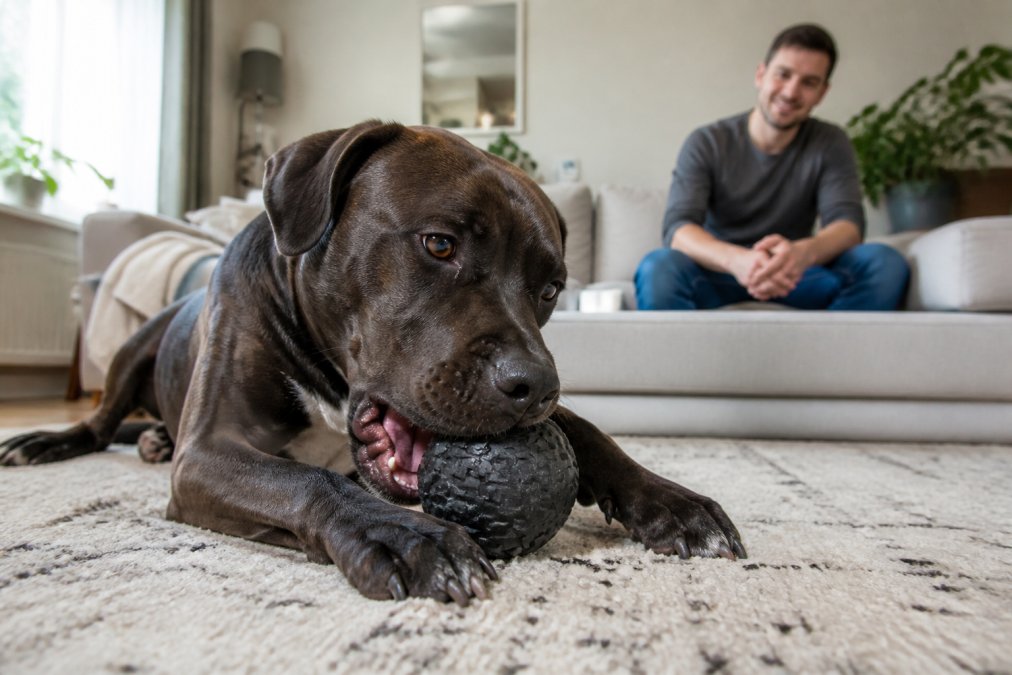
A good starting point is a molded chew ball that resists puncturing, like the Chew-Resistant Burst Ball Dog Toy, made from ETPU and built for enthusiastic chewers. For tug-focused dogs, the Stingray Rope Toy pairs a plush body with a 10-foot rope, though rope should always be supervised.


Matching Chew Intensity to Material Density
Chew intensity runs from gentle nibbling to full-force shredding, and the toy has to match it. A dog that destroys plush in minutes needs molded rubber or nylon, not a tougher plush.
How to Choose Safe Dog Toys: Materials, Toxicity, and Wear Checks
Most durability guides stop at "is it tough?" and never ask what a toy is made of, or what comes off it while your dog chews. Durability and chemical safety are separate tests, and a toy can pass the first while failing the second.
The Materials Behind "Durable", and What to Ask About Each
- Natural rubber: Flexible, puncture-resistant, and generally the least concerning of the hard-chew materials. Ask whether it is compounded with fillers, because cheap rubber often is.
- Nylon: Very hard and long-wearing, but it abrades. Over months of chewing, tiny nylon shavings can be swallowed, and hard nylon can wear enamel. Short, supervised sessions only.
- ETPU / PU (expanded thermoplastic polyurethane): Light, bouncy, and good for fetch. It is not a dedicated chew material, a determined chewer can carve pieces off it.
- TPR (thermoplastic rubber): A rubber-plastic hybrid common in "tough" toys. Softer than nylon, but quality varies enormously between brands.
- Rope: Cotton or synthetic cord. The durability problem is not the fiber, it is the fraying, swallowed strands are a known obstruction risk.
Toxicity: What "Non-Toxic" Actually Means on a Label
"Non-toxic" is a marketing claim, not a regulated certification for pet toys. No single federal standard stamps a dog toy as food-safe the way there is for children's products, so the burden falls on you to read labels critically (the FDA).
What to look for instead of the word "non-toxic":
- A named material (food-grade silicone, natural rubber, ETPU) rather than "safe plastic" or "pet-safe compound."
- A statement that the toy is BPA-free, phthalate-free, and lead-free, the three additive classes most commonly flagged in synthetic chew materials.
- A manufacturer contact or testing disclosure on the packaging or website. If a brand will not say what is in the toy, treat that as a signal.
A common pattern: the toys that fail earliest under a power chewer are also the ones with the vaguest material descriptions. Durability and transparency tend to travel together.
The 30-Second Wear Check (Do This Before Every Session)
Run this on every toy, every time it comes out of the bin:
- The thumbnail test. Press a fingernail into the surface. If it dents and stays dented, the material is breaking down.
- The twist test. Twist the toy gently. Cracks open along stress lines before they become visible chunks.
- The pull test. Tug any seam, squeaker, or attached part. If it moves, your dog will finish the job.
- The sniff test. A sour or chemical smell after washing can mean bacteria trapped in micro-cracks or degraded material.
- The drop test. Drop it on a hard floor. A dull thud instead of a bounce can signal internal breakdown in rubber toys.
Size, Shape, and the Swallow Risk
The rule of thumb: a toy should be too large to pass whole into the back of your dog's throat (akc.org). For a power chewer, add a second rule, no toy small enough that a broken-off piece could be swallowed. That eliminates most small balls, thin rings, and protruding squeakers for dogs over roughly 30 pounds.
A Note on the Human Side of the Equation
If you are shopping for a dog that shreds everything, be honest about what the toy aisle can and cannot solve. The most durable chew toys reduce destruction; they do not eliminate the boredom, teething, or anxiety driving it. Many owners find the more reliable investment is in the environment around the dog, the bedding, the washable covers, the things that get chewed by accident when a toy fails. That is the logic behind our for humans collection, which focuses on durable, washable, everyday items that survive a household with a heavy chewer. A toy is a consumable. The couch, the rug, and the blanket are not.
Rubber vs. Nylon vs. Rope vs. Plush: Which Survives Your Dog
Rubber and nylon win for durability, rope sits in the middle, and plush loses almost every time against a determined chewer. The right pick depends on whether your dog wants to chew, tug, or cuddle.
Natural rubber flexes under pressure, gentle on teeth while resisting punctures. Nylon is harder and lasts longer but can wear enamel, so keep sessions short and supervised. Rope is excellent for tug and fetch but frays, and frayed threads are a swallowing risk. Plush is best for gentle chewers and dogs who carry toys around.
For dogs that need both chew resistance and dental benefit, the Dog Chew Toy for Dental Care combines a durable build with a textured surface that helps reduce tartar.
Age-Specific Durability: Puppies, Adults, and Seniors
Puppies need softer, puppy-safe toys for teething gums, adults can handle heavy-duty chew toys, and seniors do better with softer textures that are easier on aging teeth. Age changes which material is appropriate, even for the same dog.
- Puppies: softer rubber and rope, sized small, always supervised
- Adults: dense rubber and nylon for power chewers
- Seniors: softer, pliable materials to protect worn teeth
A toy that's perfect for a two-year-old Labrador can be too hard for a twelve-year-old with dental wear.
Enrichment Toys That Beat Boredom (and Destructive Chewing)
Enrichment toys solve the root problem behind most destructive chewing: boredom. A mentally engaged dog is far less likely to shred the couch, which makes enrichment a durability strategy, not just a nice extra.
The [American Kennel Club's resources on canine behavior | akc.org] notes that mental stimulation reduces problem behaviors tied to boredom. Stuffable and lickable toys that hide treats keep a dog working, and puzzle feeders turn mealtime into a task.
For long days alone, the Dog Snuffle Toy hides treats inside a durable fleece body for foraging play, while the Interactive Feeding Toy slows eating and adds mental stimulation. Pairing a chew toy with an enrichment toy covers both the urge to chew and the need to think.

Repair, Cleaning, and Replacement Cycles for Tough Toys
A durable toy is not a permanent toy. The difference between owners who replace toys every few weeks and owners who get a year out of them is almost never the toy, it is the maintenance and rotation routine around it.
Cleaning by Material: What Actually Works
- Natural rubber and ETPU: Warm water, mild dish soap, and a bottle brush for hollow interiors. Skip the dishwasher unless the manufacturer says otherwise, high heat can warp molded rubber and accelerate cracking.
- Nylon: Scrub with a stiff brush. Nylon is porous at the surface and traps saliva and food residue in the micro-texture. A 10-minute soak in a diluted white-vinegar solution (roughly one part vinegar to four parts water) followed by a rinse is a common household approach.
- Rope: Most cotton rope toys are machine washable on a gentle cycle in a mesh bag. Air dry, a dryer will shrink and stiffen the fibers, which makes fraying worse.
- Plush: Spot clean with a damp cloth and mild soap. If it has a squeaker, do not submerge it; water trapped inside the squeaker bladder is a mold risk.
The Rotation System (The Single Biggest Lifespan Extender)
Dogs habituate to toys fast. A toy that sits in the bin for a week becomes novel again when it reappears. The practical version:
- Keep three to five toys in active rotation, not fifteen.
- Every few days, swap two out and two in. Store the rest out of sight.
- Wash each toy before it re-enters rotation.
- Retire anything that failed the wear check during its last cycle.
A common pattern: a toy ignored for a month becomes the favorite again after a week in the closet. Rotation costs nothing and effectively multiplies your toy supply.
Replacement Triggers, Retire the Toy, Not the Dog
Replace immediately when you see any of these:
- A crack, split, or chunk missing from rubber or nylon
- Frayed rope strands longer than about an inch
- An open seam, exposed stuffing, or a squeaker that has come loose
- Sharp edges on a chewed nylon toy (these abrade enamel)
- Any toy that has been chewed down to a size your dog could swallow
A simple rule that covers all of it: if you can pull a piece off with your fingers, your dog can too. Retire it that day.
The Enrichment Angle: Why Toys Fail in the First Place
A dog that destroys toys on a schedule usually does not have a toy problem, it has a stimulation problem. Destructive chewing is frequently a displacement behavior for boredom, excess energy, or mild separation anxiety. No material outlasts a dog that is chewing to fill time.
That reframes the strategy. Instead of buying a tougher toy every time one dies, pair the chew toy with enrichment that gives the dog a job:
- Stuffable and lickable toys that hold frozen treats turn a five-minute chew into a twenty-minute project.
- Snuffle and foraging toys engage the nose, which is the most tiring form of enrichment for most dogs.
- Puzzle feeders replace a fast meal with a slow, problem-solving one.
- Tug and fetch sessions burn physical energy that would otherwise go into the toy bin.
Where the Real Wear-and-Tear Happens
Even with perfect rotation and cleaning, a power chewer will go through chew toys on a predictable cycle. Meanwhile, the items that take the collateral damage, the bed the dog digs at, the blanket it carries around, the cover on the couch it leans against, need to be genuinely durable and washable, because they are not meant to be replaced every few weeks. That is the thinking behind our for humans collection: everyday items built to survive the household, not the chew session. Toys are consumables. The stuff around the dog should not be.
Frequently Asked Questions
What are some extremely durable dog toys for aggressive chewers?
Toys made from dense natural rubber, reinforced nylon, or tightly woven cotton rope hold up best against aggressive chewers. Look for thick walls, minimal seams, and no small squeaker parts that can be swallowed. The Stingray Rope Toy pairs a plush body with a 10-foot tug rope for interactive play. Rotate two or three tough toys weekly to reduce wear on any single item.
How do I choose safe dog toys that won't break immediately?
Start by matching the toy to your dog's chew intensity: light chewers do fine with plush, while power chewers need dense rubber or nylon. Check for non-toxic materials, reinforced stitching, and no loose pieces that could become a choking hazard. Inspect toys weekly for cracks, tears, or exposed stuffing, and remove anything damaged right away.
Are there non-toxic alternatives to standard plastic dog toys?
Yes. Natural rubber, cotton rope, and fleece-based fabrics are common non-toxic options. The Pet Bite Rope Dog Chew Toy is made from premium cotton rope. Always check for a veterinarian-approved or food-grade label when possible, and avoid toys with strong chemical odors, which can signal low-quality plastics or dyes.
What is the best toy for a dog that destroys everything?
Dogs that destroy toys usually need both durability and mental stimulation. Pair a tough chew toy with an enrichment toy: the Interactive Feeding Toy also slows eating and reduces boredom. Supervise new toys for the first few sessions and remove them once wear and tear appear.
How often should I replace durable dog toys?
Replace any toy showing cracks, missing chunks, exposed squeakers, or frayed rope, regardless of how long you've had it. For power chewers, inspect toys weekly and expect a replacement cycle of one to three months for heavily used items. Rotating toys extends their life. Rope toys can be rinsed or machine washed, but frayed strands should be trimmed or the toy retired to prevent ingestion.
Finding a genuinely durable dog toy means matching material density to your dog's chew intensity, checking every label and seam, and rotating in enrichment toys to head off boredom. The Pet Botique stocks chew-resistant rubber, dental chew toys, and stuffable enrichment toys built for exactly this, and you can save 10% when you buy any two items with free shipping on orders over $65. Get started with The Pet Botique and give your dog toys that actually last.


