


 support@thepetbotique.com
Table of Contents
- The Cat Adoption Checklist: What to Have Ready Before Day One
- Feeding Supplies and Hydration Stations for New Cat Owners
- Litter Box Setup: Clumping Litter, Scoops, and Placement
- How to Cat-Proof Your Home Before Bringing Kitty Inside
- Interactive Cat Toys for Enrichment and Boredom Prevention
- Comfort, Grooming, and Sleep Areas Your Cat Will Actually Use
- Health, Safety, and the First-Week Transition Plan
- Conclusion
- Frequently Asked Questions
Last Updated: September 11, 2026
The Cat Adoption Checklist: What to Have Ready Before Day One
Bringing home a cat is one of the great joys of pet ownership. It is also, for many first-timers, a quiet exercise in overwhelm. This guide from The Pet Botique walks through the essential items for new cat owners, organized so you can shop with a plan instead of guessing in the aisle.
The short version: you need six categories covered before your cat walks through the door. Food and water, litter, a carrier, scratching and enrichment, a sleep spot, and basic grooming. Everything else is a bonus.
Core Essentials vs. Nice-to-Haves
Core essentials are the items your cat physically needs in the first 48 hours. Nice-to-haves improve quality of life but can wait a paycheck or two.
- Core: food and water bowls, litter box and litter, a scoop, a carrier, a scratching post, a bed or hideout, a grooming brush
- Nice-to-have: water fountain, cat tree, window perch, puzzle feeders, automated toys, themed apparel for you
A common mistake is buying the nice-to-haves first because they are more fun to shop for. Your cat will not care about a window perch on day one. It will care about a clean litter box.
Budget-Friendly vs. Premium Tiering
You can absolutely set up a home for a cat without overspending. The trick is knowing which items deserve the upgrade.
| Item | Budget Approach | Worth Upgrading? |
|---|---|---|
| Bowls | Ceramic or stainless steel | Yes, plastic holds odors |
| Litter box | Open, large, low-sided | Yes, size matters more than price |
| Carrier | Basic hard-sided | Yes, if you travel often |
| Scratching post | Simple sisal post | Yes, stability prevents tipping |
| Cat bed | Folded blanket | Yes, washable covers save money long-term |
Spend on the items your cat touches daily. Save on the ones it ignores.
Feeding Supplies and Hydration Stations for New Cat Owners
Feed your cat from ceramic or stainless steel bowls, never plastic. Plastic scratches, holds bacteria, and is a common cause of feline chin acne. Wide, shallow bowls also reduce whisker fatigue, which is a real reason some cats refuse to eat.
Wet Food, Dry Food, and Water Fountains
Most veterinarians suggest a mix of wet and dry food. Wet food supports hydration, and cats are notoriously poor drinkers. Dry food is convenient and helps with dental abrasion. Offer both and let your cat's preference guide the ratio.
Cats are desert animals by ancestry, which means their thirst drive is weak. A water fountain encourages drinking through movement and sound. If your cat ignores a still bowl, a fountain often solves it.
Litter Box Setup: Clumping Litter, Scoops, and Placement
The rule most new owners learn the hard way: one litter box per cat, plus one extra. Two cats means three boxes. This single habit prevents most litter box avoidance issues before they start.
Use unscented clumping litter. Cats have sensitive noses, and scented litters are a frequent cause of protest. Boxes should be large, low-sided for kittens, and placed in quiet spots with an escape route.
Scoop daily. A Humane World for Animals guide to cat care notes that cleanliness is the single biggest factor in litter box compliance. A self-cleaning scoop makes the daily job faster and keeps your hands away from clumps entirely.

How to Cat-Proof Your Home Before Bringing Kitty Inside
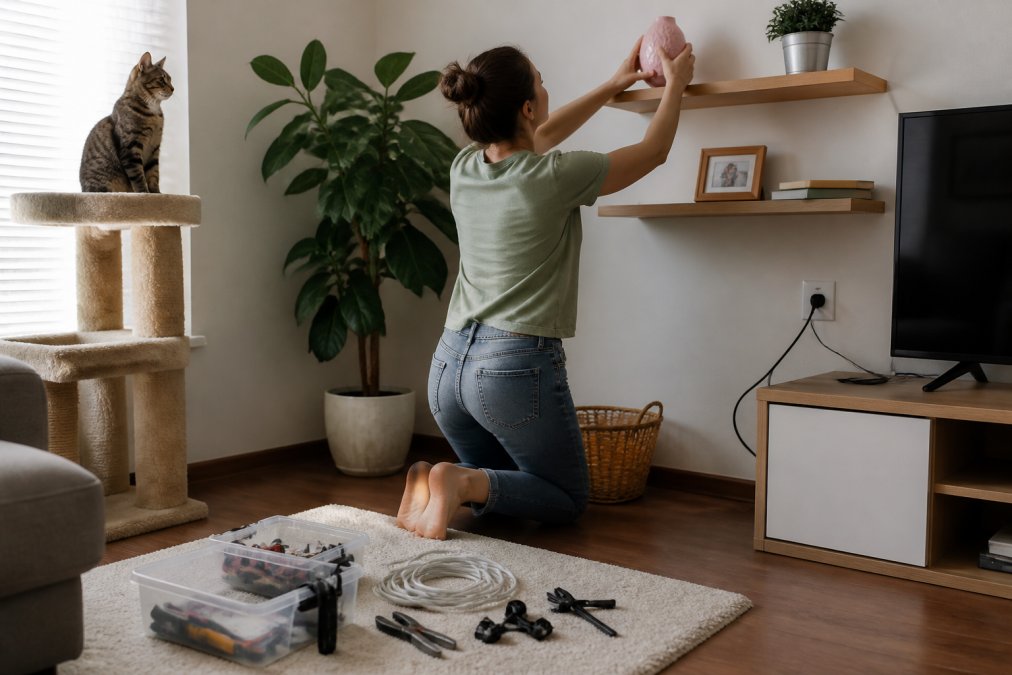
Cat-proofing is not about making your home sterile. It is about removing the handful of hazards that send new cats to the emergency clinic in the first month. Do this walkthrough before adoption day, room by room, and keep a laundry basket with you to collect anything that needs to move.
The High-Risk Hazards Most Lists Miss
- Window blind cords: loop them up on a wall cleat or wrap them around a bracket. Cats can get a leg or neck caught in a loop while batting at it.
- Recliners and fold-out sofas: check underneath before closing. Cats crawl into the frame and are crushed when the mechanism folds.
- Essential oils and diffusers: many common oils, including tea tree, eucalyptus, citrus, and peppermint, are toxic to cats. Skip the diffuser entirely or keep it in a room the cat cannot enter.
- String, ribbon, and hair ties: store them in a closed drawer. These are the most common linear foreign bodies vets remove.
- Open windows without screens: even a screened window should have a secure latch. Cats fall from height more often than owners expect.
- Plastic bags and chip clips: suffocation and ingestion risks that live in kitchen drawers.
Room-by-Room Checklist
- Kitchen: child-lock the under-sink cabinet, move cleaning chemicals to a high shelf, put a lid on the trash can, and never leave the dishwasher open.
- Living room: clip or hide electrical cords, anchor bookshelves and TVs to the wall, remove lilies, azaleas, and sago palms, and cover any floor vents the cat could step into.
- Bathroom: keep toilet lids down, store medications in a closed cabinet, and put razors and small hair accessories away.
- Bedroom: check under the bed for small objects, secure window screens, and keep the closet door closed if it holds shoes or bags with drawstrings.
- Laundry room: keep the dryer door closed and check the drum before every load. Cats seek warm, dark spaces.
- Garage and entryway: store antifreeze, fertilizers, and rodenticides on a high shelf or in a locked cabinet. These are among the most lethal household poisons for cats.
Toxic plants deserve a dedicated pass. Lilies, azaleas, sago palms, tulips, and oleander are dangerous, and the ASPCA's toxic plant database is the standard reference for checking anything green in your home.
The First 24 Hours: A Transition Plan
Most guides stop at the shopping list. The first day matters just as much.
- Set up a base camp. Choose one small room with the litter box, food, water, a bed, and a hiding spot. Close the door.
- Let the cat come out on its own. Do not pull it from the carrier. Open the carrier door and sit quietly nearby.
- Keep the house quiet. Limit visitors, loud music, and vacuuming for the first day or two.
- Offer food and water, then leave. A cat that eats within the first 24 hours is settling. A cat that does not eat for more than a day needs a vet call.
- Expand access gradually. After a few calm days, open the door to the rest of the house and let the cat explore at its own pace.
Interactive Cat Toys for Enrichment and Boredom Prevention
Interactive play is not a bonus for a new cat. It is how you convert nervous energy into trust. A cat that has just moved into an unfamiliar space is running a constant threat assessment, and a structured play session gives that instinct a safe outlet. Skip it, and the same energy shows up on your curtains, your ankles, and your sleep schedule.

The mechanism is simple: cats are ambush predators wired to stalk, chase, pounce, and catch. A wand toy with a feathered or fabric lure lets them complete that full sequence. A laser pointer only completes the chase, which is why some cats walk away frustrated or start staring at wall reflections. If you use a laser, end the session by landing the dot on a physical toy or a treat so the cat gets a catch.
Matching Toy Type to Your Cat
- Wand and teaser toys: best for bonding and for cats that need to be drawn out of hiding. Keep sessions to two ten-minute blocks a day.
- Kicker and plush toys: good for cats that like to wrestle and bunny-kick. These satisfy the catch-and-hold part of the sequence.
- Puzzle feeders and treat balls: work the foraging instinct and slow down fast eaters. Start easy so the cat does not give up.
- Motion-activated or rolling toys: useful for solo play during work hours, but rotate them so they do not become furniture.
A common pattern is that new owners buy one toy, the cat ignores it, and they conclude the cat does not play. In reality, most cats need variety and rotation. Keep three or four toys in circulation and swap them weekly. Novelty does more work than price.
Enrichment Beyond Toys
Toys are only one channel. A cat tree by a window, a bird feeder outside the glass, a cardboard box left on the floor, and a paper bag with the handles cut off all provide low-cost stimulation. Rotate these too. The goal is not a pile of products; it is a home where something interesting happens at different hours of the day.
If your cat is home alone for long stretches, pair a morning wand session with a puzzle feeder left out and a window perch. That combination covers hunting, foraging, and watching, which are the three activities that keep indoor cats settled.
Comfort, Grooming, and Sleep Areas Your Cat Will Actually Use
Cats sleep up to 16 hours a day, so a proper bed is not a luxury. Semi-enclosed beds work best because they mimic the security of a den. Place the bed in a quiet corner, not in the middle of foot traffic.
Grooming matters more than most new owners expect. A weekly brush session reduces shedding, prevents mats, and cuts down on hairballs. Short-haired cats need less, long-haired cats need daily attention.
A self-groomer corner brush is a smart addition. It mounts on a wall corner and lets your cat groom itself while you are busy. Pair it with a standard brush for the areas your cat cannot reach.

Health, Safety, and the First-Week Transition Plan
Book a veterinary exam within the first week. Your vet will check for parasites, confirm vaccination status, and discuss microchipping and ID tags. Even indoor cats need identification in case they slip out.
The American Veterinary Medical Association recommends a full wellness exam for any newly adopted cat, regardless of prior history. Bring any records the shelter provided.
Behavioral Troubleshooting in the First Month
Hiding is normal for the first few days. Give your cat a small room to start, then expand access gradually. Do not force interaction.
Common early issues and fixes:
- Not eating: try wet food, warm it slightly, offer privacy
- Litter box avoidance: add a box, switch to unscented litter, move it somewhere quieter
- Scratching furniture: place a scratching post next to the target, reward use
- Night vocalizing: add play sessions before bed
A pheromone diffuser can help anxious cats settle faster. It mimics the calming scent cats leave when rubbing their cheeks on objects.
Conclusion
Setting up for a new cat is less about buying everything and more about buying the right things first. Get the essentials right, and the rest of the journey gets easier for both of you.
At The Pet Botique, we stock the items this guide covers, from cozy beds that actually get used. Buy any two items and save 10%, and shipping is free on orders over $65. Start with the essentials, then add the fun stuff.
Get started with The Pet Botique and build a home your cat will settle into fast.
Frequently Asked Questions
What is the 3-3-3 rule for new cats?
The 3-3-3 rule breaks the first month into three phases. For the first 3 days, your cat needs a quiet room, hiding spots, and minimal handling. At 3 weeks, they start learning your routine and exploring more confidently. By 3 months, most cats feel at home and show their real personality. This timeline helps new cat owners set realistic expectations instead of worrying when a cat hides under the bed for a week.
What are the absolute must-have items for a first-time cat owner?
The non-negotiables are a litter box with unscented clumping litter and a scoop, ceramic or stainless steel food and water bowls, a carrier, a scratching post, a cat bed, and at least one wand toy. Add a grooming brush, ID tag, and a vet visit within the first week. Everything else, like cat trees or water fountains, can wait until you learn your cat's preferences.
How do I cat-proof my home before my new cat arrives?
Start by securing window screens, hiding electrical cords, and storing toxic plants like lilies and philodendrons out of reach. Install childproof latches on cabinets holding cleaning supplies, and check that your dryer and washer are always closed. Block gaps behind appliances where a kitten could squeeze through. A dedicated safe room with a litter box, food, and a hiding spot gives your cat a calm base during the first few days.
What type of litter box is best for a new cat?
Most cats prefer an uncovered box that is at least 1.5 times their body length, placed in a quiet spot away from food and water. For kittens, use a low-sided box so they can climb in easily. Unscented clumping litter is the safest default because scented varieties can deter cats. If you have multiple cats, the rule is one box per cat plus one extra.
Do I need specific grooming tools for a new cat?
Yes, but keep it simple. A soft bristle brush or rubber grooming brush works for short-haired cats, while long-haired breeds need a metal comb to prevent mats. Add nail clippers and cat-safe toothpaste if you plan to brush their teeth. Start grooming sessions short, around two minutes, and pair them with treats so your cat associates the brush with something positive.
How can I create a safe space for my new cat?
Set up a small room, like a bathroom or spare bedroom, with a litter box, food and water bowls, a cozy cat bed, and a hiding spot such as a covered box or the Comfortable Semi-Enclosed Cat Nest. Keep the door closed for the first few days so your cat can adjust without overwhelming stimuli. Visit calmly, speak softly, and let the cat approach you rather than picking them up.


