


 support@thepetbotique.com
Table of Contents
- Start With Your Pet's Sleep Style and Size
- Durable Dog Bed Materials That Actually Hold Up
- Best Orthopedic Beds for Senior Dogs and Joint Support
- How to Clean and Maintain Pet Beds for a Longer Lifespan
- Bed Placement, Temperature Regulation, and Environmental Factors
- When to Repair, Replace, or Upgrade Your Pet Bed
- Frequently Asked Questions
Last Updated: October 1, 2026
Start With Your Pet's Sleep Style and Size
Choosing long lasting pet beds starts with how your dog actually sleeps, not how the bed looks in a photo. Dogs fall into two broad groups: curlers and stretchers. Get this wrong and even a well-built bed wears out early, because your pet fights the shape every night.
Curlers vs. Stretchers: Match the Bed Shape to the Sleeper
Curlers tuck their nose to their tail and want a round bed with raised edges, often called a donut or bolster bed. The raised rim supports the head and neck.
Measuring for Fully Extended Length and Weight Capacity
Measure your dog nose to tail while fully stretched out, then add roughly 6 to 8 inches of extra length, plus a few inches beyond the shoulder span for width.
Durable Dog Bed Materials That Actually Hold Up
Durable dog bed materials come down to two layers: the fill inside and the cover outside. A tough cover over cheap fill still sags within months, and premium foam under a thin cover gets shredded by a chewer.

Fill Types: Memory Foam, High-Density Foam, and Interlocking Fill
Memory foam softens with body heat and contours to pressure points, which helps older dogs and dogs with joint stiffness. It can feel warm in summer.
| Fill Type | Best For | Holds Shape | Maintenance |
|---|---|---|---|
| Memory foam | Seniors, joint pain | Moderate | Spot clean, air out |
| High-density foam | Large and heavy dogs | Longest | Replace cover, keep core |
| Interlocking fill | Budget, adjustable loft | Shortest | Re-fluff, top up |
Covers and Liners: Oxford Cloth, Waterproof Liners, and Tear-Resistant Fabric
The cover takes the daily beating, so fabric choice decides whether the bed lasts. Oxford cloth is tightly woven, scratch-resistant, and stands up to digging and circling.
Best Orthopedic Beds for Senior Dogs and Joint Support
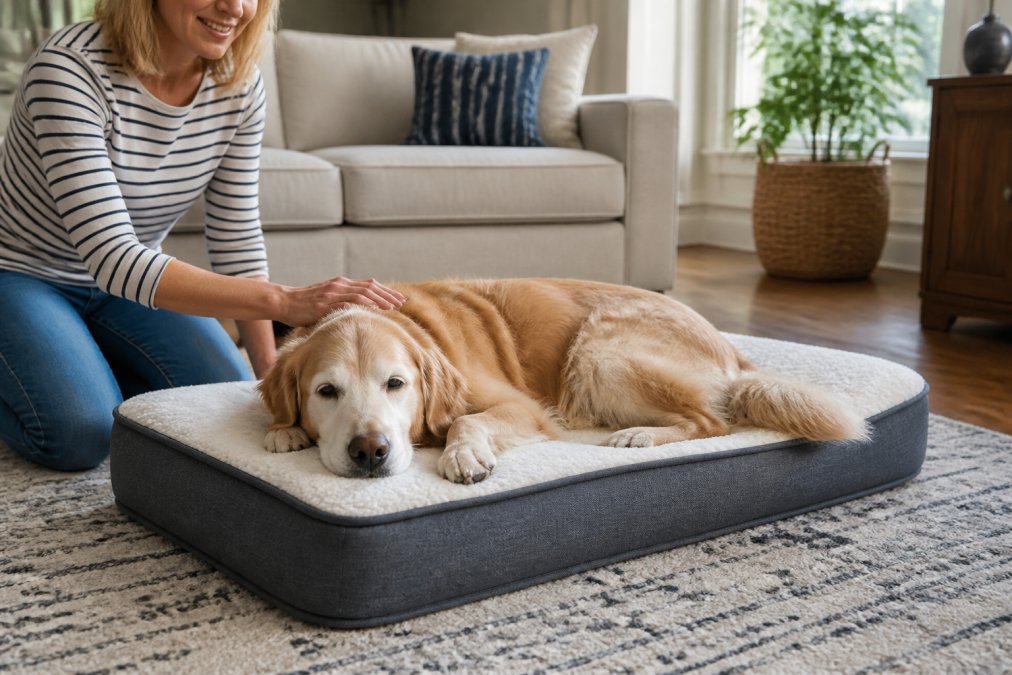
The best orthopedic beds for senior dogs use thick, supportive foam that spreads weight away from pressure points instead of letting hips and elbows sink to the floor. For an older dog with arthritis, that cushioning is what makes getting up in the morning easier.
How to Clean and Maintain Pet Beds for a Longer Lifespan
Knowing how to clean and maintain pet beds is the difference between a bed that lasts one season and one that lasts several. Most premature failures are not manufacturing defects; they are foam that got wet, covers that got washed wrong, and fill that was never aired out.
- Vacuum or brush the cover weekly to lift hair and grit before it works into the weave. A rubber curry brush or lint roller pulls embedded fur out of Oxford cloth fast.
- Wash removable covers every two to four weeks, more often for heavy shedders or dogs with allergies.
- Air the foam core in shade for a few hours each month to release trapped moisture and odor. Sunlight degrades the foam, so shade is the move.
- Check seams and zippers monthly, and repair small tears before they spread.
- Rotate or flip the bed every few weeks so weight is not concentrated in one spot. Mark the head end with tape to track which side gets compressed.
Washing Removable Covers Without Breaking Down the Foam
Never put the foam core in a washing machine. Agitation tears foam apart and traps water inside, leading to mold and a bed that never recovers its shape.
Deodorizing Without Harsh Chemicals
Pet beds hold odor in two places: the cover fibers and the foam core. Baking soda sprinkled on a dry cover, left 15 minutes, then vacuumed, lifts surface odor without a wash. For the core, a 50/50 mix of white vinegar and water, misted lightly and air-dried in shade, neutralizes urine and drool odor without soaking the foam.
Re-Fluffing and Redistributing Fill
Shredded foam and fiber cluster beds lose loft unevenly because your dog sleeps in the same spot. Once a month, unzip the liner and massage the fill back toward the compressed area, then shake the bed. For interlocking fill, this habit can add a year or more of usable life. Foam-core beds do not re-fluff, if the foam has compressed, shaking will not bring it back.
Bed Placement, Temperature Regulation, and Environmental Factors
Where you put the bed affects how long it lasts as much as how you clean it. Heat, damp, and direct sun break down foam and fabric faster than normal use.
Washable Large Orthopedic Dog Bed →
Environmental factors to weigh:
- Keep the bed off cold, damp concrete and away from drafty doors.
- Avoid direct sun, which fades covers and dries out foam.
- Use a non-slip base on hard floors so the bed stays put.
- Give crated dogs a bed sized to the crate so they are not crammed against the bars.
When to Repair, Replace, or Upgrade Your Pet Bed
Most owners replace beds too early or too late. A flattened orthopedic bed stops doing its job for a dog with joint issues, and a torn cover lets the fill escape and clump. The repair-first mindset is what separates a bed that lasts two years from one that lasts five.
Use this as a rough guide:
| Symptom | Action | Why It Matters |
|---|---|---|
| Small seam tear | Repair | Cheap fix, stops fill loss |
| Cover worn, foam firm | Replace cover | Core still supports joints |
| Foam flat or lumpy | Replace bed | No cushioning left |
| Persistent odor after washing | Replace bed | Moisture reached the core |
| Zipper broken, cover intact | Replace zipper or use a cover clip | Cheaper than a new bed |
| Waterproof liner cracked | Replace liner | Foam is unprotected |
How to Patch a Torn Cover
For a seam tear under two inches, a hand stitch with heavy-duty upholstery thread and a curved needle closes it in minutes and holds up to washing better than iron-on patches, which peel after a couple of cycles. For larger rips, an iron-on fabric patch on the inside plus a stitch around the edge is the durable fix.
Replacing Just the Cover or Liner
If the foam core still springs back when you press it with your palm, the bed has years left. A replacement cover or new waterproof liner restores the parts that actually wear out. This is the highest-return maintenance move for a foam bed, and it is why buying a bed with a removable, replaceable cover matters more than the initial price.
When Repair Is Not Worth It
Repair is worth it when the foam is still firm and only the cover or a seam has failed. Replace the whole bed once the core is compressed, because that is the part doing the orthopedic work. A core that stays compressed after you press it, feels lumpy, or smells musty even after airing is done, those are the signals to stop spending on it.
Upgrading When Needs Change
An upgrade makes sense when your dog's needs have changed, such as a puppy growing into a large breed or a senior developing stiffness. A lightweight cotton bed like our Soft Dog Beds For Large Dogs is a good travel and backup option, while a foam bed is the better long-term pick for daily support at home. If you replace a bed every year, the problem is usually the fill type, moving from shredded fill to a high-density foam core stops the replacement cycle.
Frequently Asked Questions
What materials make a pet bed truly long-lasting?
The most durable pet beds combine high-density foam or memory foam for the base, a tear-resistant and scratch-resistant cover like Oxford cloth, and a waterproof liner to protect the fill from accidents and moisture. Removable, machine-washable covers extend lifespan significantly because you can clean them without degrading the foam. Chew-resistant stitching and a non-slip base also prevent premature wear. Beds built with these durable dog bed materials typically outlast cheaper alternatives by years, making them a better investment over time.
How often should you replace a pet bed?
Most quality pet beds last two to four years with proper care. Replace yours sooner if the foam has flattened and no longer supports your pet's joints, if the cover is torn beyond repair, or if persistent odors remain after washing. Senior dogs and heavy chewers may need replacements more frequently. Choosing a bed with a removable, machine-washable cover and a waterproof liner can push that replacement cycle closer to the four-year mark. Inspect the fill every six months for compression or clumping.
Are orthopedic beds more durable than standard foam beds?
Orthopedic beds made with high-density or memory foam generally hold their shape longer than standard poly-fill beds, which tend to flatten and clump within months. The denser foam resists compression, so it maintains supportive comfort for joints and pressure points over a longer period. However, durability also depends on the cover and liner quality. An orthopedic bed with a flimsy cover may wear out just as fast as a cheap option. Look for thick foam paired with a removable, machine-washable, tear-resistant cover for the best longevity.
How can I tell if a pet bed is durable before buying?
Check the fill density and type first; high-density foam or memory foam outperforms loose poly-fill. Look for covers made from Oxford cloth, heavy canvas, or other tear-resistant fabrics with reinforced stitching. A waterproof liner is a strong indicator of thoughtful construction. Read the care instructions: removable, machine-washable covers signal easier maintenance and longer life. Also verify weight capacity and size dimensions match your pet's fully extended length. Beds with non-slip bases and hypoallergenic materials round out the durability checklist.
A bed that sags after a few months is frustrating for you and uncomfortable for your dog, especially as joints get stiffer with age. The fix is matching shape, fill, and cover to how your pet actually sleeps, then keeping it clean and dry. The Pet Botique stocks orthopedic foam beds, calming donut beds, and crate pads built for daily use, with a 10% saving when you buy any two items and free shipping on orders over $65. Shop now and give your best friend a bed that holds up.


