


 support@thepetbotique.com
Table of Contents
- What You'll Need Before You Start
- How to Clean Pet Beds Properly: Step-by-Step
- How Often to Wash Dog Bed (and Cat Beds)
- The Best Pet-Safe Laundry Detergent for Bedding
- Cleaning Orthopedic Foam Pet Beds Without Ruining Them
- Removing Pet Odors from Fabric: What Actually Works
- Drying Methods and Preventing Mold
- Common Mistakes to Avoid
- Post-Wash Maintenance and When to Replace
- Frequently Asked Questions
Last Updated: September 22, 2026
What You'll Need Before You Start
Gathering your supplies first makes the whole job faster and safer for your pet. A little prep now prevents mid-wash scrambles later.
Here's what to have on hand:
- A vacuum with an upholstery attachment or handheld vacuum
- Pet-safe detergent, ideally one without dyes or heavy fragrance
- White vinegar and baking soda for odor and stain treatment
- An enzyme cleaner for set-in pet stains
- A soft-bristle brush or sponge
- Rubber gloves and a laundry bag for small covers
- A drying rack or access to a machine dryer
How to Clean Pet Beds Properly: Step-by-Step
Learning how to clean pet beds properly comes down to three stages: remove loose debris, treat stains, then wash the right parts the right way.
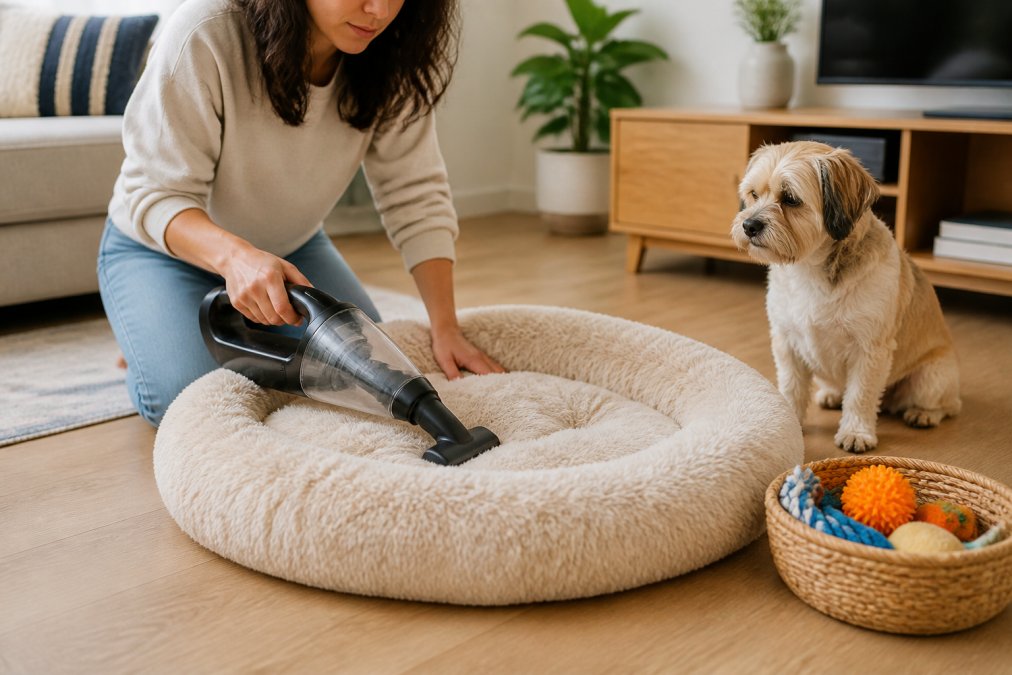
Step 1: Vacuum and Remove Loose Debris
Vacuum both sides of the bed before it gets wet. Water plus loose hair turns into a muddy paste that's hard to rinse out.
Use an upholstery attachment to pull up:
- Pet hair and dander
- Dust, crumbs, and dirt
- Dried mud and debris
Step 2: Spot-Clean Stains and Soiled Areas
Treat stains before the full wash. Blot, don't rub, so you don't push the mess deeper into the fabric.
Step 3: Machine Wash or Hand Wash
Check the care label, then choose your method.
For machine-washable covers, use a gentle cycle with warm water and pet-safe detergent. Zip the cover closed and place it in a laundry bag to protect the zipper.
How Often to Wash Dog Bed (and Cat Beds)
The short answer: wash most pet beds every two to four weeks. Wash more often if your pet sheds heavily, has allergies, or drools a lot.
Here's a simple schedule to follow:
| Situation | How Often |
|---|---|
| Average, healthy pet | Every 2-4 weeks |
| Heavy shedder or drooler | Every 1-2 weeks |
| Pet with allergies or skin issues | Weekly |
| After illness, accidents, or fleas | Immediately |
| Senior or incontinent pet | As needed, often weekly |
The Best Pet-Safe Laundry Detergent for Bedding
The best pet-safe laundry detergent for bedding is a mild, fragrance-free formula made for sensitive skin. Skip anything with bleach, dyes, or strong perfumes.
Look for these traits:
- Free of dyes and heavy fragrance
- Gentle on skin and paws
- Safe for machine and hand washing
- Rinses clean without residue
Reading the Label Like a Pro
Most people scan for the word "gentle" and stop there. That word is marketing, not chemistry. Here's what actually matters on the ingredient panel:
- Surfactants do the cleaning. Plant-derived ones (coconut or corn based) tend to rinse cleaner than petroleum-derived ones, which can leave a film that attracts dirt.
- Enzymes (protease, amylase, lipase) break down protein, starch, and fat soils. For pet bedding, enzyme-containing detergent is a genuine advantage because urine, saliva, and dander are protein-heavy.
- Optical brighteners are dyes that make fabric look whiter. They stay on the fabric after rinsing and are a common skin irritant. Avoid them on anything your pet sleeps on.
- Fragrance is listed as one word but can represent dozens of undisclosed compounds. "Fragrance-free" and "unscented" are not the same thing. Unscented may contain masking fragrance; fragrance-free should not.
- Preservatives like methylisothiazolinone (MI) are common contact allergens. If your pet has unexplained skin irritation, this is a frequent culprit.
How Much Detergent Is Actually Enough
Detergent residue is the most common cause of post-wash skin irritation, and it comes from over-dosing, not under-dosing. A few practical rules:
- Use the lowest line on the cap, not the middle. For a bed cover, that is usually plenty.
- If your machine has a "extra rinse" setting, use it for pet bedding. It costs a few minutes and removes the residue that traps odor.
- For hand washing, one teaspoon of mild detergent per gallon of warm water is enough for a standard cover.
- If the rinse water still feels slippery, keep rinsing. Slippery means soap, and soap means residue.
What to Skip
- Bleach breaks down fabric fibers and leaves a harsh residue. It also does not remove odor; it masks it.
- Fabric softener coats fibers with a waxy film that reduces absorbency and traps odor over time. It also builds up in your machine.
- Dryer sheets do the same thing to the inside of your dryer and to the bed. Skip them.
- Scented beads or boosters add fragrance that lingers and can trigger reactions in pets with allergies.
If your pet has allergies, double-check the label for anything that could trigger a reaction. When in doubt, run one extra rinse cycle. It is the cheapest insurance against a skin flare-up.
Cleaning Orthopedic Foam Pet Beds Without Ruining Them
Orthopedic foam beds need special care. The foam core should never go in a washing machine or dryer.
Here's how to clean orthopedic foam pet beds safely:
- Unzip and remove the cover, then wash it per its label
- Spot-clean the foam with a damp cloth and mild soap
- Blot, don't soak, so moisture doesn't reach the core
- Air dry the foam fully before putting the cover back on
- Vacuum the foam to lift surface hair and dander
Removing Pet Odors from Fabric: What Actually Works
Enzyme cleaners and vinegar do the heavy lifting for odor removal. Masking sprays only cover the smell for a while.
What works:
- Enzyme cleaners for urine, vomit, and other protein stains
- White vinegar solution for general odors
- Baking soda to absorb smells from dry fabric
- A full wash with pet-safe detergent for deep odor
What doesn't work:
- Air fresheners and scented sprays
- Hot water on protein stains, which sets the smell
- Rubbing stains instead of blotting
Drying Methods and Preventing Mold
Air drying is the safest choice for most pet beds. If you use a dryer, pick low heat to avoid shrinking or melting fabric.
Try these drying methods:
- Air dry on a rack in a well-ventilated room
- Tumble dry on low heat for machine-safe covers
- Flip the bed halfway through drying
- Point a fan at the bed to speed things up
Common Mistakes to Avoid
A few common mistakes cause most pet bed damage. Avoid them and your bed will last far longer.

- Washing foam inserts instead of spot-cleaning them
- Using bleach, dyes, or harsh detergent on pet bedding
- Skipping the vacuum step before washing
- Drying on high heat and shrinking the cover
- Putting the bed away damp
- Using too much detergent and leaving residue
- Ignoring the care label
Post-Wash Maintenance and When to Replace
Cleaning is only half the job. How you handle the bed after washing determines whether it keeps its shape, loft, and support, or flattens into a lumpy mat within a few cycles.
Reshaping and Fluffing by Fill Type
Different fills need different post-wash handling. Treating them all the same is how beds lose their structure.
-
Break up clumps by hand while the bed is still slightly damp, not bone dry. Damp fiber separates more easily.
-
Tumble on low heat with two or three clean tennis balls or dryer balls. The balls beat the fill back into shape as it dries.
-
If the bed is too large for a dryer, knead and shake it every hour during air drying.
-
Press the foam gently with your palms to check for stiff spots. Stiffness means moisture is still trapped inside.
-
Let it air for another 24 hours if you feel any coldness or dampness in the core.
-
Do not stack anything on top of it while it dries. Weight compresses the foam and can leave permanent dents.
-
Rotate the foam core 180 degrees each time you wash the cover. This distributes body weight evenly and slows the compression that leads to flat spots.
Between-Wash Upkeep
A little routine care extends the life of any bed:
- Vacuum the bed weekly with an upholstery attachment. This removes dander and hair before it works into the fill.
- Rotate the bed every two weeks so it wears evenly. Pets tend to sleep in the same spot, which compresses one area faster than the rest.
- Keep a spare cover on hand so you can wash one while the other is in use. This also reduces the temptation to put a damp cover back on the bed.
- Air the bed outdoors in indirect sunlight for an hour or two on dry days. Sunlight helps kill surface bacteria and freshens the fabric without chemicals.
When to Replace Instead of Clean
Cleaning has limits. Replace the bed when:
- The foam core stays damp after 48 hours of air drying, or smells musty even after a full wash. That is mold inside the foam, and it will not come out.
- The cover has tears at the seams or zipper that expose the fill. Loose fill is a choking hazard and a hiding place for pests.
- The bed has been treated for fleas or bedbugs and the infestation returns after two full cleaning cycles. Reinfestation usually means eggs or larvae are inside the fill.
- The foam has lost its rebound. Press your palm into the center; if the dent stays for more than a few seconds, the foam is done. A worn-out bed stops supporting joints, which matters most for older pets.
- There is a persistent urine odor after two enzyme treatments. Urine can soak into foam and re-crystallize, and once it reaches that stage, replacement is cheaper than repeated cleaning.
For pet parents who want a bed that holds up, The Pet Botique carries options built for daily use. You can save 10% when you buy any two items, and shipping is free on orders over $65.
Frequently Asked Questions
How to freshen up a dog bed without washing it?
Sprinkle baking soda over the entire bed and let it sit for 15-20 minutes to absorb odors, then vacuum it up with an upholstery attachment. For a quick refresh between washes, lightly mist the surface with a diluted vinegar solution (one part white vinegar to three parts water) and let it air dry completely. This tackles surface odors and pet dander without fully submerging the bed, making it ideal for orthopedic foam beds or beds with removable covers you cannot wash that day.
How often should I clean pet beds?
Wash your pet's bed every two to four weeks for a healthy pet, and weekly if your dog or cat has allergies, skin conditions, or sheds heavily. Spot-clean soiled areas immediately between full washes. Beds used by senior pets or those with incontinence issues may need washing every few days. Regular cleaning removes pet dander, dust mites, and odor-causing bacteria that build up quickly in fabric.
Can I put a foam pet bed in the washing machine?
Most foam inserts should not go in a washing machine because agitation breaks down the foam structure and traps moisture that leads to mold. Instead, remove the cover and machine wash it according to the care label. For the foam insert itself, spot-clean with mild soap and a damp cloth, then air dry completely in a well-ventilated area away from direct sunlight. Our Washable Large Orthopedic Dog Bed has a removable zippered cover designed for easy washing while the sponge foam base stays protected.
What is the best detergent to use for pet bedding?
Choose a pet-safe, hypoallergenic laundry detergent that is free of dyes, fragrances, and optical brighteners. Enzyme-based detergents work best for removing pet odors from fabric because they break down the proteins in urine, saliva, and dander. Avoid fabric softeners and dryer sheets, which leave residue that can irritate your pet's skin and reduce the fabric's ability to wick moisture. Always use the recommended amount and run an extra rinse cycle if your pet has sensitive skin.
Pet beds take a beating, and keeping them truly clean takes the right steps, not just a quick wash. The Pet Botique makes it easier with beds designed for real life, including removable, washable covers and sturdy materials that stand up to frequent cleaning. Explore our cozy beds and blankets, and stock up on durable pet care essentials your pet will love. Get started with The Pet Botique and give your best friend a cleaner, comfier place to rest.


