


 support@thepetbotique.com
Table of Contents
- Quick Comparison: Happy and Polly vs Love Thy Beast
- How to Choose a Pet Carrier for Travel
- What Makes the Best Airline Approved Pet Carriers
- Durability and Wear: Canvas vs Synthetic Materials
- Only Natural Pet Alternatives for Toys
- Fitment Guide: Matching Carrier Size to Your Pet
- Conclusion
- Frequently Asked Questions
Last Updated: September 19, 2026
Quick Comparison: Happy and Polly vs Love Thy Beast
Happy and Polly vs Love Thy Beast comes down to a simple split: one brand leans on soft canvas tote styling, the other on structured synthetic builds. This guide from The Pet Botique breaks down where each approach wins and where it falls short.
Neither carrier is automatically the right call. The better choice depends on your pet's weight, your airline's carry-on rules, and how often you actually travel.
Below, we'll walk through materials, sizing, and the fitment details most reviews skip.
If you've ever scrolled a social thread asking whether either brand is worth it, you're in the right place. The honest answer: both build real carriers, but they solve different problems.
| Feature | Canvas Tote Style | Synthetic Travel Bag |
|---|---|---|
| Material feel | Soft, breaks in over time | Holds shape from day one |
| Ventilation mesh | Usually limited to 1-2 panels | Often 3+ mesh panels |
| Cleaning | Spot clean, some machine washable | Wipe-down, rarely machine washable |
| Structure | Collapsible, packs flat | Rigid base support |
| Best for | Short trips, calm pets | Frequent flyers, anxious pets |
How to Choose a Pet Carrier for Travel
Start with your airline's carry-on dimensions, then work backward to your pet's measurements. Most in-cabin carriers fail not because of quality but because the owner measured the pet, not the space under the seat.
A common mistake is buying for the pet's current size and forgetting they grow. Measure length from base of tail to nose, height from floor to top of head, then add roughly two inches of clearance.
- Check the weight limit the carrier itself is rated for, not just your pet's weight
- Confirm ventilation mesh sits on at least two sides for airflow
- Test the zipper security before you're at the gate
- Look for an interior safety tether to clip to a harness
- Weigh the empty carrier if you'll be carrying it for hours
What most guides miss is the shoulder strap. A padded, adjustable strap with even weight distribution matters more than most shoppers expect on a long travel day.
What Makes the Best Airline Approved Pet Carriers
The best airline approved pet carriers meet three tests at once: they fit under the seat, they ventilate well, and they keep your pet contained without panic. Miss any one of those and the trip gets harder.
Soft-sided carriers generally pass the "squish test" better than hard cases, since they flex into tight spaces. That flexibility is why canvas totes and nylon travel bags dominate in-cabin recommendations.
American Kennel Club guidance on traveling with pets notes that confirming your specific airline's rules before booking avoids most gate-side surprises.
Breathability is the other half of the equation. Mesh panels on the top and both sides keep air moving, which matters most for flat-faced breeds and warm climates. Structural integrity and hardware quality round it out: a carrier that sags or pops a zipper mid-flight is a problem you can't fix at altitude.
Durability and Wear: Canvas vs Synthetic Materials
Canvas wins on breathability and comfort; synthetic wins on shape retention and easy cleaning. Which one lasts longer depends entirely on how you use it, and on which specific failure points you inspect before you buy.
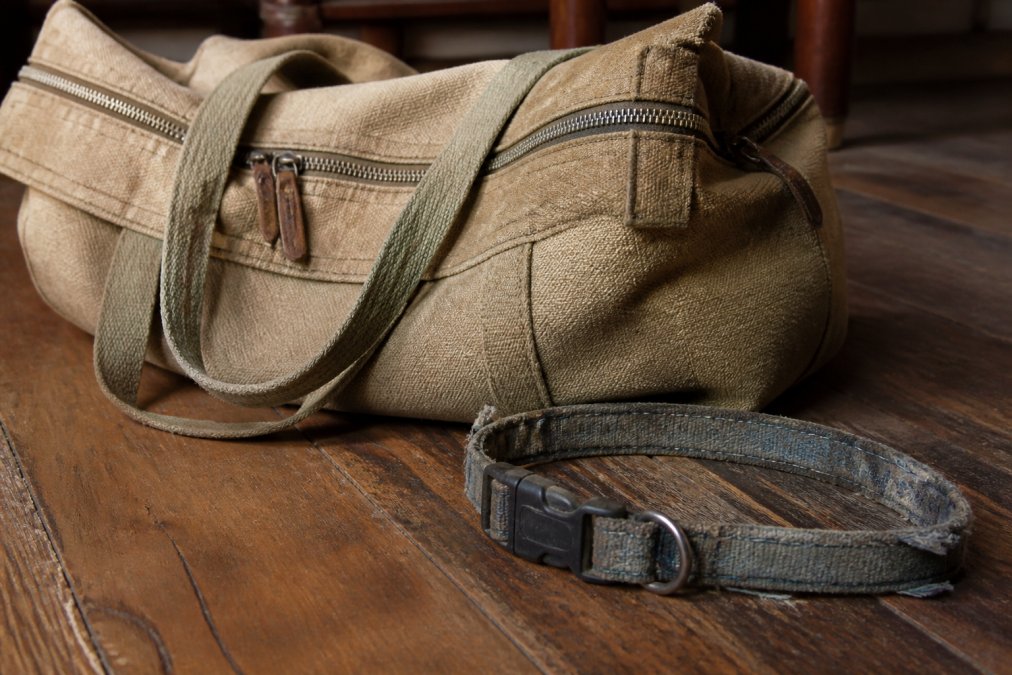
Most reviews stop at first impressions. A more useful lens is a wear-and-tear timeline, because the parts that fail on a pet carrier fail in a predictable order.
Months 1-3: hardware and stitching settle in. Zippers either glide or they don't. On soft carriers, the strap anchor is the first stress point, it carries the full loaded weight every time you lift the bag. A single line of stitching at that anchor is the most common early failure. Look for box-X stitching or a reinforced bar tack at the strap junction.
Months 3-6: base integrity shows. Canvas softens with use, which is comfortable for the pet but can let the floor panel bow under a heavier animal. A removable, rigid base insert, often a plastic or dense foam board slipped into a sleeve, is what keeps the carrier from sagging. If the base insert is sewn in rather than removable, you can't replace it when it fatigues.
Blessed and Dog Obsessed Unisex classic →
Months 6-12: mesh and lining wear. Ventilation mesh abrades where the pet's paws and claws contact it. Cheaper mesh develops pulls and runs; denser, coated mesh holds. Interior lining stains are the other long-term issue, light-colored linings show every accident, while dark or patterned linings hide wear but make it harder to spot dirt.
What actually lasts:
- Canvas totes, a well-stitched tote with a reinforced base and metal (not plastic) zipper pulls can hold up for years of weekend trips. The fabric itself rarely fails; the seams and base do.
- Synthetic travel bags, hold shape and wipe clean fast, which helps with containment and cleanup. The trade-off is breathability: cheaper synthetic shells trap heat, so mesh placement matters more than shell thickness.
- Hard-sided carriers, resist crushing and clean easily, but offer less flex for tight under-seat spaces and fewer mesh panels for airflow.
Maintenance that extends life: spot-clean canvas with a damp cloth and mild soap rather than machine washing, which can shrink fabric and distort the base sleeve. Wipe synthetic shells after every trip to prevent odor buildup in the coating. Air-dry both fully before storing, trapped moisture is what breaks down zipper tape and lining adhesive.
Only Natural Pet Alternatives for Toys
If you're already comparing carriers, you may also be hunting for Only Natural Pet alternatives for toys. The good news: you don't need to shop multiple stores to cover carriers and playtime in one order.
At The Pet Botique, we stock cozy beds and pet care essentials alongside pet-parent apparel. You can save 10% when you buy any two items, and shipping is free on orders over $65.

Fitment Guide: Matching Carrier Size to Your Pet
Match the carrier to your pet's measurements first, then to the airline's carry-on dimensions. Getting the order backward is why so many carriers get returned.
Here's the breed and size fitment most comparison guides skip:
| Pet Size | Typical Weight Range | Example Breeds | Carrier Priority |
|---|---|---|---|
| Small | Under 10 lbs | Chihuahua, kitten, Yorkie, guinea pig | Ventilation and light weight |
| Medium | 10-20 lbs | Beagle, adult cat, Shih Tzu, Boston Terrier | Base support and padding |
| Large | 20-30 lbs | Corgi, French Bulldog, Cocker Spaniel | Structural integrity and tether |
| Extra Large | Over 30 lbs | Border Collie, Basset Hound, most retrievers | Check airline limits first |
Measure the pet, then measure the space. Measure length from base of tail to nose, height from floor to top of head, then add roughly two inches of clearance. Compare those numbers against the carrier's interior dimensions, not its exterior. A carrier that looks roomy outside can be tight inside once padding and mesh take up space.
The under-seat test. Most in-cabin carriers fail not because of quality but because the owner measured the pet, not the space under the seat.
Conclusion
Choosing between these two carrier styles is really about your travel habits, not brand loyalty. Canvas suits calm pets and short trips; synthetic suits frequent flyers and anxious pets who need structure.
Frequently Asked Questions
Is Happy and Polly a legitimate pet supply brand?
Happy and Polly is a legitimate online retailer that sells pet carriers and accessories. However, as with any brand, quality can vary by product. When evaluating any pet carrier comparison, look for specific construction details like reinforced stitching, sturdy zippers, and breathable mesh panels. For travel, verify that the carrier meets airline carry-on dimensions for in-cabin use.
Are Love Thy Beast carriers airline approved?
Love Thy Beast makes canvas and leather carriers that may fit under some airline seats, but 'airline approved' is not a universal certification. Each airline sets its own carry-on dimensions. Before flying, measure your carrier against the specific airline's under-seat space. A carrier that works for one airline may not fit another. Always check with your airline directly before travel day.
What are the main differences between canvas and synthetic pet carriers?
Canvas carriers use natural fibers that develop character over time but can stain and may need spot cleaning. Synthetic options like nylon travel bags resist moisture, wipe clean easily, and often cost less. Canvas tends to be heavier but offers structural integrity and a classic look. Synthetic materials dry faster and hold up well to machine washable cleaning. Your choice depends on whether you prioritize durability, ease of cleaning, or appearance.
How do I choose the right size carrier for my pet?
Measure your pet from nose to tail base and from floor to top of head while standing. Add 2-3 inches to each measurement for movement. The carrier should allow your pet to stand, turn around, and lie down comfortably. Weight limit matters too: check the carrier's stated capacity. For airline travel, the carrier must fit under the seat, which often limits size regardless of your pet's dimensions.
Are there better alternatives to Happy and Polly for pet toys?
Many pet parents look for Only Natural Pet alternatives for toys. Interactive toys that dispense treats or make sounds can help with travel anxiety and boredom. Always supervise new toys until you know how your pet interacts with them.


