


 support@thepetbotique.com
Table of Contents
- Essential Supplies for New Puppy Owners: What You Need Before Day One
- Puppy Proofing Checklist: Securing Your Home Room by Room
- Puppy Training Essentials: Collars, Harnesses, and Positive Reinforcement Tools
- Grooming, Hygiene, and Health Basics
- Safe Toys and Enrichment for Teething Puppies
- Travel, Car Safety, and Going Out
- New Puppy Budget: Budget-Tier vs. Premium Picks
- Frequently Asked Questions
Essential Supplies for New Puppy Owners: What You Need Before Day One
Bringing a new puppy home without the right supplies is one of the most common mistakes first-time dog owners make. Getting the essentials right from the start saves you money, reduces stress, and sets your puppy up for a healthier, happier life. The biggest waste of money in the first month is buying duplicates of things you got wrong the first time.
Feeding and Nutrition Essentials
Puppies need age-appropriate food formulated for their life stage. The ASPCA's guide to puppy nutrition recommends feeding puppies three to four times per day until around six months of age, then transitioning to twice daily.
Before your puppy arrives, have ready:
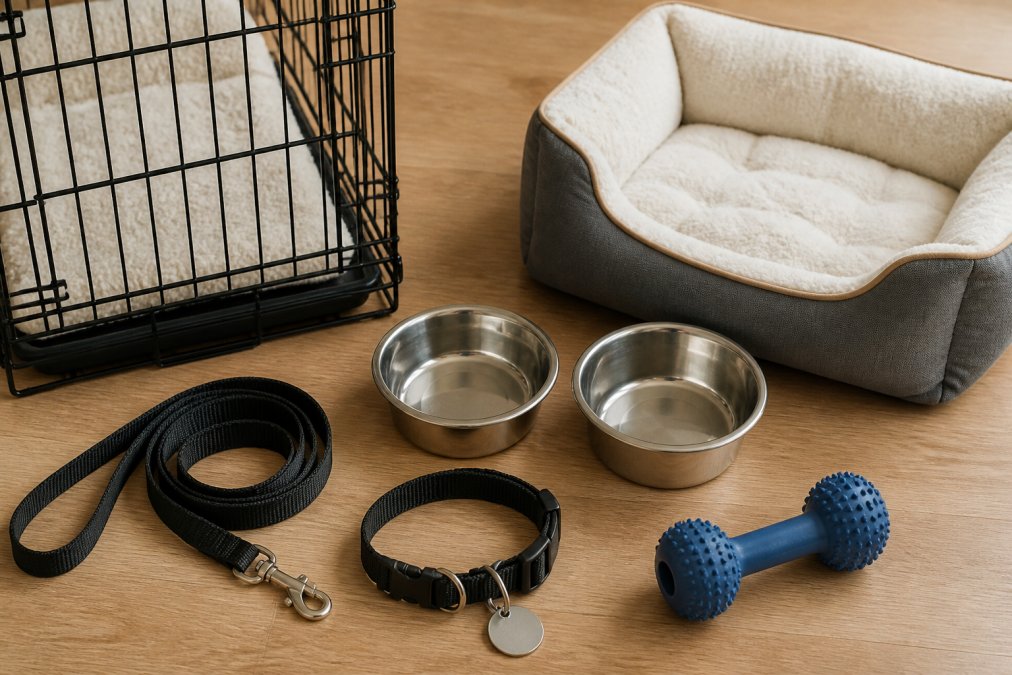
- Stainless steel or ceramic food and water bowls, avoid plastic, which can harbor bacteria
- Age-appropriate puppy food, look for the AAFCO statement confirming it meets nutritional levels for growth
- A slow feeder bowl, especially for fast eaters; reduces bloat risk and adds mental engagement
- Measuring cup, overfeeding puppies is extremely common; follow the feeding guide on the food packaging
A slow feeder is worth the small extra investment, as many puppies eat so fast they make themselves sick in the first week home.
Crate Training and Confinement Gear
A crate is not a punishment but one of the most important tools you can own as a new puppy parent. Crate training gives your puppy a safe, den-like space and dramatically accelerates housetraining. Choose a crate that fits your puppy's expected adult size, with a divider panel to make it smaller while they're young. A crate that's too large lets puppies use one end as a bathroom, defeating the purpose entirely.
You'll also want a playpen or baby gates to limit your puppy's access to the home during the early weeks.
Bedding and Comfort
A washable dog bed with a removable cover is essential, puppies have accidents, and you'll be washing bedding frequently in the first few weeks. Avoid expensive orthopedic beds until your puppy is past the destructive chewing phase. A simple, durable, washable bed is the smarter starting point. Add a worn t-shirt or blanket from the breeder or shelter to help your puppy feel secure in their new environment.
Puppy Proofing Checklist: Securing Your Home Room by Room
A puppy-proofing checklist is a room-by-room audit of your home to remove or secure anything a curious, teething puppy could chew, swallow, or knock over. According to the AVMA's pet safety resources, household toxins and foreign body ingestion are among the leading causes of emergency veterinary visits in puppies under one year old.
Work through each room before your puppy arrives:
- Secure electrical cords behind furniture or inside cord covers
- Move cleaning products, medications, and chemicals to high shelves or locked cabinets
- Remove toxic houseplants (lilies, pothos, sago palm, and aloe are all hazardous to dogs)
- Install baby gates at stairways and room entrances you want to restrict
- Check for small objects at floor level that could be swallowed
- Secure trash cans with locking lids
- Close toilet lids
- Tuck away shoes, socks, and children's toys
The kitchen and bathroom are the two highest-risk rooms. Prioritize those first.
Puppy Training Essentials: Collars, Harnesses, and Positive Reinforcement Tools
Positive reinforcement is the method with the strongest body of evidence behind it and is recommended by certified professional dog trainers across the board.
Leash and Collar Training Gear
The right leash and collar setup depends on your puppy's size and temperament:
- Flat buckle collar, for holding your ID tag; should fit two fingers snugly between the collar and your puppy's neck
- ID tag, engrave your phone number before your puppy comes home
- 4-6 foot standard leash, avoid retractable leashes for puppies; they teach pulling and offer poor control
- Harness, a front-clip harness is ideal for puppies who pull; it redirects forward momentum without putting pressure on the throat
Potty Training Supplies
Potty training is mostly about consistency, but the right supplies remove friction:
- Enzyme cleaner, the only product that fully breaks down odor compounds in urine and feces; regular cleaners mask the smell but leave enough behind that puppies will return to the same spot
- Potty pads, useful for apartment dwellers or during overnight training
- Waste bags, buy in bulk
- Outdoor stake and tie-out, optional, but useful for supervised outdoor potty breaks in a fenced yard
The enzyme cleaner is the item most new owners skip and then regret. Buy it before your puppy arrives.
Grooming, Hygiene, and Health Basics
Grooming is not just cosmetic. Regular brushing, nail trimming, and ear cleaning are health practices that prevent infections, matting, and discomfort.
Grooming and Hygiene Kits
Start grooming your puppy early to build comfort with being handled. A basic grooming kit includes:
- Slicker brush or grooming mitt, suited to your puppy's coat type
- Puppy shampoo, formulated for sensitive puppy skin
- Nail clippers or a nail grinder, blunt nails prevent scratching and floor damage
- Ear cleaning solution and cotton balls, especially important for floppy-eared breeds
- Puppy-safe dental care, finger toothbrushes and enzymatic puppy toothpaste
Flea, Tick, and Dental Care
Flea and tick prevention should be discussed with your veterinarian before you choose a product. Age matters: many preventatives are not safe for puppies under a certain weight or age. The FDA's guide to safe flea and tick products for pets outlines which product types are approved and what to watch for in terms of adverse reactions.
Dental care is the other health basic that most new owners postpone until it's a problem. Start brushing your puppy's teeth in the first week, even if it's just a quick, gentle pass.
Safe Toys and Enrichment for Teething Puppies
Teething puppies chew everything. The question is not whether they'll chew, but what you give them to chew on.
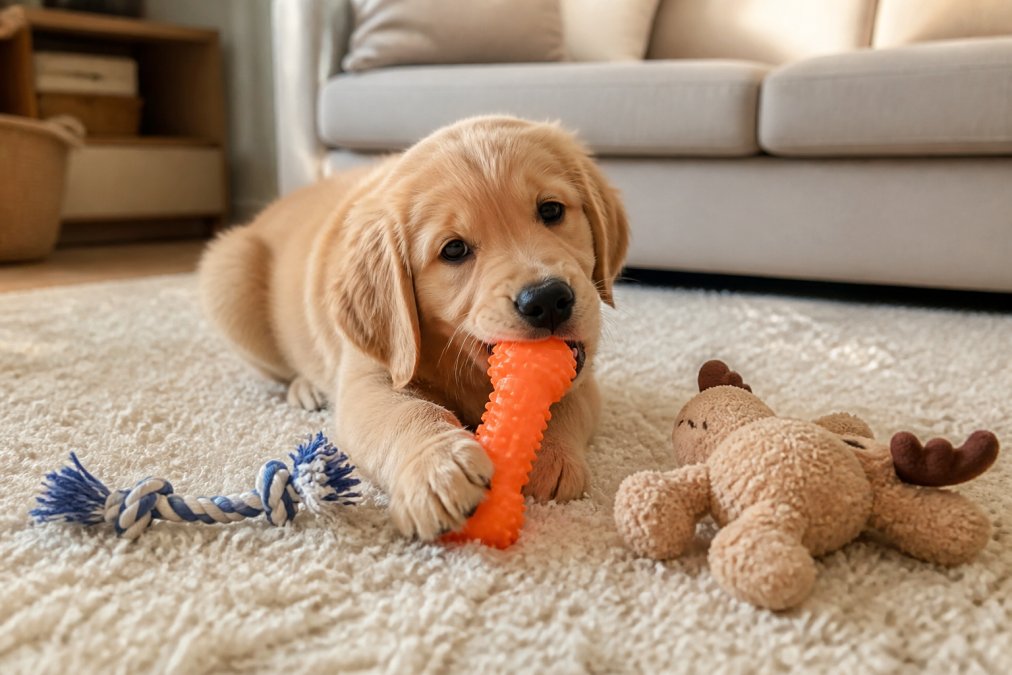
Safe toys for teething puppies are non-toxic, durable enough that your puppy can't break off and swallow chunks, and sized appropriately so they can't be swallowed whole. Stock for a teething puppy:
- Rubber chew toys, look for non-toxic, dishwasher-safe options; some can be filled with food
- Rope toys, good for tug-of-war and chewing, but monitor for fraying
- Puzzle feeders, slow down eating and provide mental stimulation
- Squeaky plush toys, fine for supervised play only
- Frozen chew items, wet a rope toy or rubber toy and freeze it; the cold soothes inflamed gums
Start with three to four high-quality options across different types, then rotate and add as you learn what your puppy prefers.
Travel, Car Safety, and Going Out
An unrestrained puppy in a vehicle is a safety risk. Options for car safety include:
- Car restraint harness, attaches to the seatbelt; look for crash-tested options
- Travel crate secured in the cargo area, particularly good for larger breeds
- Back seat barrier, keeps your puppy in the rear seats without fully confining them
Beyond the car, going out with a new puppy requires a portable water bowl, a small treat pouch for training rewards, and a waste bag holder that clips to your leash.
Your veterinarian will advise when it's safe for your puppy to interact with unknown dogs and visit public spaces after their vaccination schedule is underway. Once cleared for broader outdoor socialization, plan to add a longer leash and more varied enrichment toys to your kit.
New Puppy Budget: Budget-Tier vs. Premium Picks
Knowing where to spend and where to save makes a real difference in first-year costs.
| Supply Category | Budget-Tier Approach | Premium-Tier Approach | Best For |
|---|---|---|---|
| Food bowls | Stainless steel basics | Ceramic slow feeders | All puppies; slow feeder if fast eater |
| Crate | Wire crate with divider | Heavy-duty travel crate | Budget for home; premium for frequent travel |
| Bedding | Washable flat mat | Orthopedic washable bed | Budget first; upgrade post-teething phase |
| Leash and collar | Nylon flat collar + leash | Padded harness + biothane leash | Budget for small breeds; premium for pullers |
| Toys | 3-4 mixed rubber and rope | Enrichment puzzle feeders | Premium enrichment worth it for high-energy breeds |
| Grooming kit | Basic brush + nail clippers | Full grooming kit with dryer | Budget fine for short-coated breeds |
Most budget-tier supplies work perfectly well in the first few months. Premium genuinely pays off for crates for large or strong breeds, harnesses for pullers, and enrichment toys for high-energy or working breeds.
Breed-Specific and Size Considerations
Breed and size affect almost every item on this list. A Great Dane puppy needs a crate that will fit a 120-pound adult dog. A Chihuahua puppy needs a harness with clips sized for a 6-pound frame. For brachycephalic breeds (bulldogs, pugs, French bulldogs), a harness is especially important since collars put pressure on already-compressed airways. For double-coated breeds (Huskies, Golden Retrievers, Bernese Mountain Dogs), invest in a de-shedding brush from day one.
Eco-Friendly and Sustainable Puppy Products
If eco-conscious purchasing matters to you, look for waste bags made from plant-based or recycled materials, toys made from natural rubber or recycled materials, organic cotton rope toys, and bedding with recycled polyester fill. Sustainable options tend to cost more upfront but often offer higher quality and fewer replacements over time.
| Supply | Budget Priority | Can Wait | Never Skip |
|---|---|---|---|
| Enzyme cleaner | No | No | Yes |
| ID tag + microchip | No | No | Yes |
| Crate | No | No | Yes |
| Slow feeder bowl | Yes | Yes | No |
| Orthopedic bed | Yes | Yes | No |
| Puzzle feeder | Yes | Yes | No |
| Car restraint | No | No | Yes |
| Flea/tick prevention | No | No | Yes |
Pulling together the right kit before your puppy comes home removes a huge amount of first-week chaos. The essential supplies for new puppy owners aren't complicated, but they require thought about your puppy's size, breed, and your living situation. Start with the non-negotiables, resist the urge to overbuy, and add items as you learn what your specific puppy actually needs.
Frequently Asked Questions
Q: What are the absolute must-haves for a first-time puppy owner?
A: The core essentials for new puppy supplies include a properly sized crate, food and water bowls, age-appropriate puppy food, a collar with an ID tag, a leash, potty pads, enzyme cleaner, a grooming brush, and at least two non-toxic chew toys. Scheduling a veterinary checkup within the first week is equally important. Getting these items in place before your puppy arrives makes the first 30 days significantly smoother for both of you.
Q: How much should I budget for initial puppy supplies?
A: First-time costs vary widely depending on breed size and whether you choose budget-tier or premium products. Budget-conscious shoppers can cover the basics for roughly $100-$200, while those investing in higher-quality crates, beds, and grooming kits may spend $300-$500 or more upfront. Recurring costs like food, waste bags, flea and tick prevention, and training treats add to monthly expenses. Visit The Pet Botique's website for current pricing on specific items.
Q: What is the 3-3-3 rule for new puppies?
A: The 3-3-3 rule describes a common adjustment timeline: the first 3 days your puppy feels overwhelmed and scared, the first 3 weeks they start learning routines and feeling more comfortable, and after 3 months they fully settle into your home. Having the right supplies ready from day one, a secure crate, a washable bed, and consistent feeding tools, supports each phase of this transition and reinforces positive reinforcement during socialization.
Q: What supplies do I need to puppy-proof my home?
A: A solid puppy proofing checklist includes baby gates to block stairs and off-limit rooms, a playpen for supervised free time, cord covers, cabinet locks, and non-toxic chew deterrent spray for furniture and baseboards. Remove houseplants that are toxic to dogs and store cleaning products out of reach. Check the ASPCA's list of puppy-safe and toxic plants before bringing your pup home.
Q: What are the best types of toys for teething puppies?
A: Teething puppies need toys that are durable, non-toxic, and sized appropriately for their breed. Rubber chew toys designed for teething provide safe relief for sore gums. Rope toys and soft stuffed toys offer enrichment, but check for loose parts that could be swallowed. Rotating two or three toy types prevents boredom. Avoid toys with small pieces or thin plastic that can splinter, especially during the heavy chewing phase between 3 and 6 months.
Q: Do new puppy supply needs change after vaccinations?
A: Yes. Before your puppy completes their vaccination series, limit outdoor exposure to unfamiliar dogs and public spaces. During this period, indoor potty pads are especially important. Once your vet clears your puppy for full outdoor activity, you can transition to outdoor-only potty routines and begin using a car restraint or travel crate for outings. Post-vaccination, socialization opportunities expands, so a well-fitted harness and ID tag become daily essentials.
The challenge every new puppy owner faces is knowing what's genuinely essential versus what's clever marketing. The Pet Botique takes the guesswork out of it with a curated range of durable, puppy-safe toys, cozy washable beds, and reliable care essentials, all in one place. Buy any two items and save 10%, with free shipping on orders over $65. Shop the new puppy essentials collection and give your puppy the start they deserve.
This article was written using GrandRanker


