


 support@thepetbotique.com
Table of Contents
- Why Bored Dogs Need More Than Just a Chew Stick
- Quick Comparison: Best Interactive Toys for Bored Dogs
-
Top Interactive Toys for Bored Dogs: Full Reviews
- 1. KONG Classic Dog Toy - Best All-Around Boredom Buster
- 2. Nina Ottosson Puzzle Toys - Best for Problem-Solving
- 3. StarMark Bob-A-Lot - Best Treat-Dispensing Wobbler
- 4. Snuffle Mat - Best for Scent Work and Foraging
- 5. LickiMat - Best for Anxiety and Calm Enrichment
- 6. Outward Hound Hide-A-Squirrel - Best Plush Puzzle Toy
- 7. Wobble Wag Giggle Ball - Best for Solo Play
- 8. Flirt Pole - Best for High-Energy Prey Drive
- Mentally Stimulating Dog Toys for High Energy Dogs
- Durable Puzzle Toys for Aggressive Chewers
- How to Keep a Dog Busy While at Work
- Frequently Asked Questions
Last Updated: September 2, 2026
Most dog owners discover the hard way that a bored dog is a destructive dog. Chewed furniture, shredded pillows, and scratched doors signal a dog whose brain and body lack sufficient stimulation. At The Pet Botique, we've compiled this guide to the best interactive toys for bored dogs to solve that problem with the right gear.
Interactive toys for bored dogs range from treat-dispensing wobblers and multi-level puzzle feeders to scent-work mats that tap into a dog's instinctual behavior. The challenge is matching the right toy to your dog's age, energy level, and chewing habits. Below, we break down eight top picks with full reviews, a comparison table, and practical advice on toy rotation and cleaning.
Quick Picks:
- Best Overall: KONG Classic, the gold standard for treat-dispensing and durable chewing
- Best Puzzle Toy: Nina Ottosson, multi-level cognitive challenge for food-motivated dogs
- Best for Anxiety: LickiMat, calming lick enrichment for stressed or reactive dogs
- Best for Solo Play: Wobble Wag Giggle Ball, no owner interaction required
- Best for Scent Work: Snuffle Mat, engages foraging instincts at any age
Why Bored Dogs Need More Than Just a Chew Stick
Canine enrichment provides activities that satisfy instinctual behavioral needs, including foraging, chewing, scent work, and problem-solving. A plain chew stick addresses only oral stimulation, leaving cognitive development, prey drive, and social engagement untouched.
Research from the American Kennel Club's canine behavior resources confirms that mental stimulation is as important as physical exercise for a dog's overall well-being. Dogs lacking enrichment frequently develop destructive behavior, excessive barking, and separation anxiety.
Dogs are scavengers and hunters by nature. A puzzle feeder requiring a dog to nose open sliding tiles directly outlets canine cognition that standard bowl feeding ignores. Physical exercise burns energy but does not replace the cognitive satisfaction of working for a reward.
Quick Comparison: Best Interactive Toys for Bored Dogs
| Toy | Best For | Chew Durability | Solo Play | Difficulty Level |
|---|---|---|---|---|
| KONG Classic | All-around boredom and chewing | High (natural rubber) | Yes | Adjustable |
| Nina Ottosson Puzzle | Problem-solving, food-motivated dogs | Moderate (composite) | Yes | Level 1-4 |
| StarMark Bob-A-Lot | Treat dispensing, slow feeding | High | Yes | Adjustable |
| Snuffle Mat | Scent work, foraging | Low (fabric) | Yes | Easy-Medium |
| LickiMat | Anxiety, calm enrichment | Low (TPR/rubber) | Yes | Easy |
| Outward Hound Hide-A-Squirrel | Plush puzzle, hunting instinct | Low (plush) | Supervised | Easy |
| Wobble Wag Giggle Ball | Solo play, sound engagement | Moderate (vinyl) | Yes | Easy |
| Flirt Pole | High-energy prey drive | High (pole) | No | N/A |
Top Interactive Toys for Bored Dogs: Full Reviews
The eight toys below cover the full spectrum of enrichment: treat-dispensing, puzzle feeding, scent work, licking, plush hunting, sound play, and prey-drive exercise.
1. KONG Classic Dog Toy - Best All-Around Boredom Buster
The KONG Classic solves three problems at once: boredom, separation anxiety, and destructive chewing. Made from durable natural red rubber, its hollow center can be stuffed with kibble, peanut butter, wet food, or frozen treats. Freezing the stuffed KONG extends engagement to 20-30 minutes. It's available in multiple sizes from XS through XXL, with a separate KONG Extreme version for power chewers.
Pros:
- Highly durable natural rubber withstands moderate to heavy chewing
- Treat-dispensing design provides mental stimulation and slows eating
- Freezable for extended solo engagement
Cons:
- Standard version not suitable for extreme power chewers
2. Nina Ottosson Puzzle Toys - Best for Problem-Solving
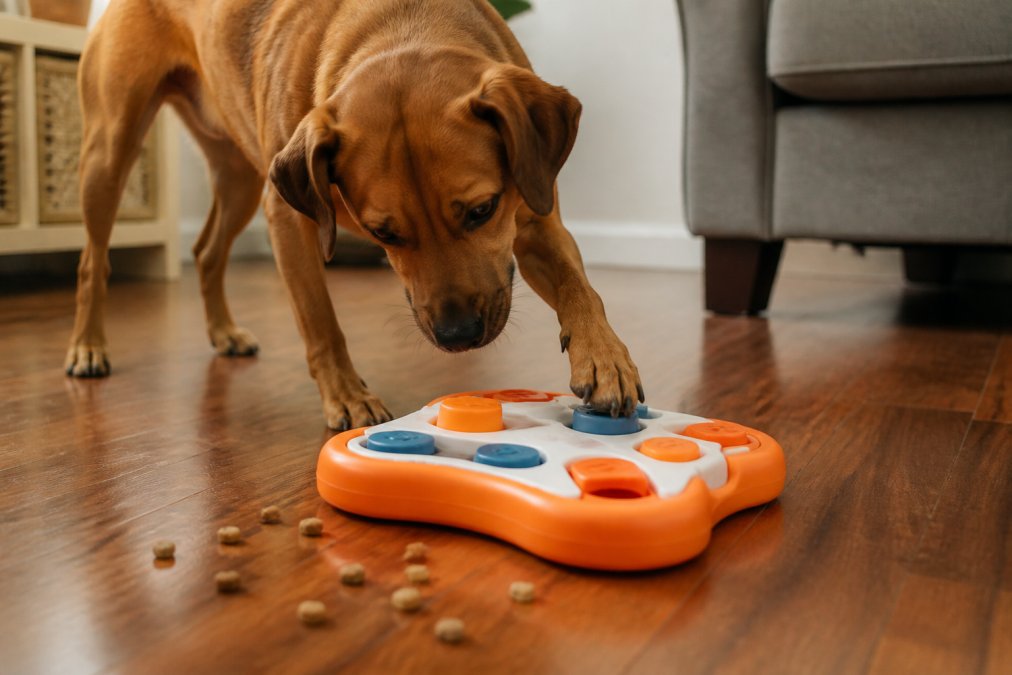
For food-motivated dogs, Nina Ottosson puzzles offer cognitive challenge beyond simple treat-dispensing. The range runs from Level 1 (beginner) to Level 4 (expert), with clear upgrade paths as dogs master each level. These puzzles require dogs to combine nose work with paw manipulation, engaging canine cognition more thoroughly than single-action toys. Made from food-safe composite materials that are BPA, PVC, and phthalate-free, they clean easily with warm water and mild soap.
Pros:
- Multiple difficulty levels keep advanced dogs challenged over time
- Food-safe, non-toxic materials suitable for all ages
- Doubles as a slow feeder for fast eaters
Cons:
- Requires owner to load treats and supervise initial sessions
- Start one level lower than you think to avoid frustration
3. StarMark Bob-A-Lot - Best Treat-Dispensing Wobbler
The StarMark Bob-A-Lot features adjustable openings on both chambers, so you can increase difficulty as your dog improves. The weighted anti-slip base makes it wobble unpredictably when nudged, triggering foraging instincts and keeping dogs engaged longer than a standard dispensing ball. The dual-chamber design holds enough kibble to serve as a full meal replacement.
Pros:
- Adjustable difficulty extends the toy's lifespan
- Wobbling action engages natural hunting and foraging instincts
- Suitable for dogs needing weight management or slower eating
Cons:
- Noisy on hard floors
- Very small opening settings can frustrate dogs new to dispensing toys
4. Snuffle Mat - Best for Scent Work and Foraging
A snuffle mat is a textured fabric mat with multiple strips and pockets designed to hide kibble or treats, encouraging dogs to use their sense of smell to forage for food. The foraging process itself is the enrichment, dogs engage the same instinctual behavior that wild canines use to locate food. For dogs with separation anxiety or those prone to destructive behavior when left alone, a snuffle mat provides a calming, low-intensity activity. Snuffle mats are machine washable.
Pros:
- Engages natural foraging instincts and reduces boredom stress
- Machine washable for easy maintenance
- Versatile: works with kibble, small treats, or dry food
Cons:
- Fabric strips can be destroyed by aggressive chewers without supervision
- Requires regular cleaning to prevent bacterial buildup
5. LickiMat - Best for Anxiety and Calm Enrichment
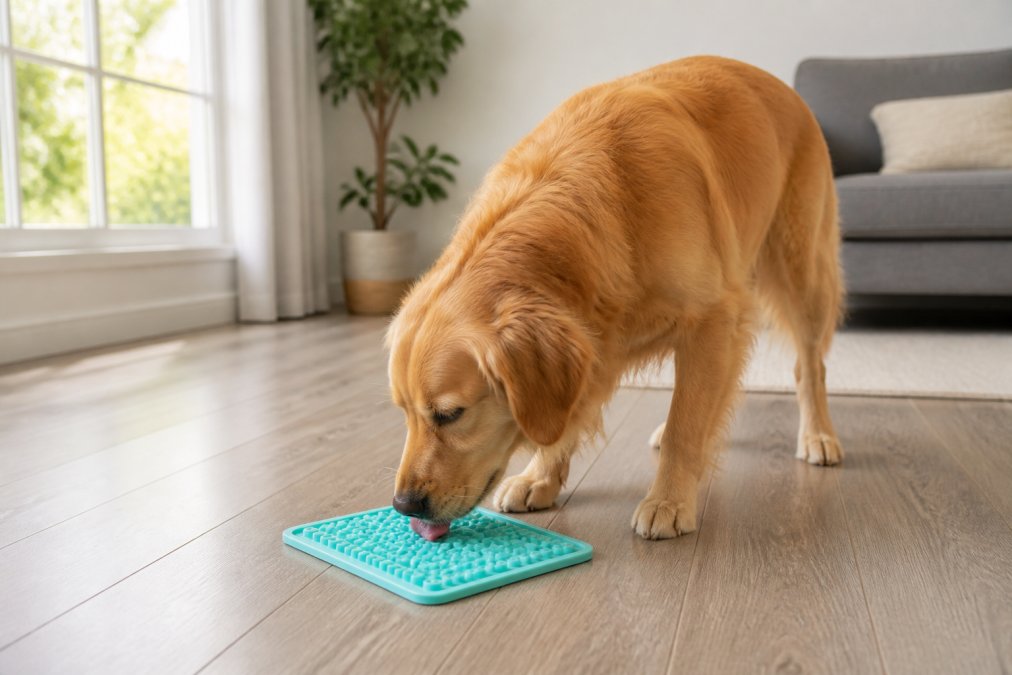
The LickiMat operates on a different principle than other toys. Repetitive licking triggers the release of calming endorphins in dogs, making it a behavioral tool for managing anxiety, overstimulation, and stress. Spread peanut butter, plain yogurt, mashed banana, wet food, or pureed vegetable across the textured surface. The texture slows licking, extending the activity and promoting slower eating. It is freezer-friendly and dishwasher safe.
This is the go-to option for puppies during crate training, senior dogs with limited mobility, and any dog struggling with veterinary visits, thunderstorms, or fireworks.
Pros:
- Calming lick action reduces anxiety and destructive behavior
- Versatile: works with many soft foods
- Freezer and dishwasher safe
Cons:
- Not suitable for aggressive chewers
- Requires supervision, especially with puppies
6. Outward Hound Hide-A-Squirrel - Best Plush Puzzle Toy
Hide-A-Squirrel taps directly into prey-drive instincts. Squeaky plush squirrels are hidden inside a soft plush tree trunk, and the dog "hunts" them out. The 2-in-1 design means individual squirrels can also be used for fetch once the trunk is emptied. It is soft on teeth, making it suitable for puppies and senior dogs.
Pros:
- Engages natural hunting and foraging instincts without treats
- Soft on teeth, suitable for puppies and older dogs
- Doubles as a fetch toy once squirrels are removed
Cons:
- Plush material not suitable for aggressive chewers
- Requires supervision to prevent ingestion of plush components
7. Wobble Wag Giggle Ball - Best for Solo Play
The Wobble Wag Giggle Ball earns its place because the "giggle" sounds it emits when rolled or shaken are mechanically produced, no batteries, no charging, no failure point. The sound triggers curiosity on its own, so most dogs return to it repeatedly without owner prompting. The six clutch pockets make it easy for dogs to grab, carry, and shake. Made from flexible, phthalate-free vinyl, it is durable enough for moderate play but not rated for power chewers.
Pros:
- No batteries required; sound mechanism is built into the structure
- Encourages independent play and physical activity
- Suitable for indoor and outdoor use
Cons:
- Sound may become repetitive for owners in small spaces
- Not suitable for aggressive chewers
8. Flirt Pole - Best for High-Energy Prey Drive
A flirt pole is a long pole with a lure attached to a rope, designed to simulate prey movement and engage a dog's chasing instinct in a controlled environment. Ten minutes of flirt pole play can tire out a dog that a 30-minute walk barely touches. It also doubles as an impulse control training tool: practice "sit," "wait," and "drop it" during sessions to build self-regulation alongside physical outlet.
Pros:
- Efficient high-energy exercise in a small space
- Excellent for impulse control training
- Channels prey drive safely and constructively
Cons:
- Requires owner participation, not a solo-play option
- Lures may need frequent replacement with strong chewers
Mentally Stimulating Dog Toys for High Energy Dogs
High-energy dogs need their brains worked as much as their bodies. The most effective approach combines two enrichment types in a single session: one physically demanding toy (flirt pole, wobble ball) followed by one cognitively demanding toy (Nina Ottosson puzzle, frozen KONG).
Matching Toy Type to Activity Level and Age
A common mistake is buying toys based on breed alone. Age and individual temperament matter just as much.
| Life Stage | Best Toy Types | Key Consideration |
|---|---|---|
| Puppy (under 1 year) | LickiMat, soft plush puzzles, Level 1 puzzle feeders | Soft on developing teeth; short sessions |
| Adult (1-7 years) | KONG, Nina Ottosson Level 2-4, Flirt Pole, Bob-A-Lot | Match difficulty to energy level |
| Senior (7+ years) | LickiMat, snuffle mat, Level 1-2 puzzles | Low-impact; prioritize scent work over physical play |
| High-energy adult | Flirt Pole, KONG Extreme, Wobble Ball + puzzle combo | Combine physical and cognitive enrichment |
| Anxious dog | LickiMat, snuffle mat, frozen KONG | Calming, repetitive, low-pressure activities |
Durable Puzzle Toys for Aggressive Chewers
Aggressive chewers destroy most toys within days. Durable puzzle toys need specific materials: natural rubber (KONG Extreme grade), reinforced nylon, and thick composite plastics hold up. Plush, thin vinyl, and standard rubber are not appropriate for power chewers.
The KONG Extreme uses a denser rubber compound than the standard KONG Classic. For treat-dispensing, the StarMark Bob-A-Lot's hard plastic construction withstands more punishment than most rubber dispensing toys.
Safety Tips and Materials to Look For
Safety is the first filter for aggressive chewers. According to the ASPCA's pet safety guidance on toy materials, toys should be non-toxic, free of small detachable parts, and appropriately sized so dogs cannot swallow them.
Practical safety checklist for aggressive chewers:
- Choose toys rated specifically for "power chewers" or "aggressive chewers"
- Size up: a toy that fits entirely in your dog's mouth is a choking hazard
- Inspect toys after every play session for cracks, missing chunks, or fraying
- Discard any toy chewed down to a swallowable size
- Avoid toys with squeakers unless deeply embedded and the outer shell is intact
- Prioritize non-toxic, BPA-free, and phthalate-free materials
- Supervised play is mandatory for any new toy until you know how your dog interacts with it
How to Keep a Dog Busy While at Work
Dogs left alone for extended periods need a structured enrichment plan, not just a pile of toys. Novelty drives engagement. A dog seeing the same three toys every day will ignore them within a week.
A practical daily rotation for a dog home alone:
- Morning (before you leave): Frozen KONG or frozen LickiMat, takes 20-30 minutes
- Midday (if a dog walker visits): Flirt pole or snuffle mat session
- Afternoon: Rotate in a puzzle toy (Nina Ottosson) or Bob-A-Lot with their afternoon kibble portion
- Evening: Interactive play with owner, fetch, tug, or flirt pole
Keeping toys out all day backfires. Dogs habituate to constant access. Rotating toys in and out, keeping most stored away and cycling them every few days, preserves novelty and keeps each toy feeling new.
Toy Rotation and Cleaning to Extend Engagement
Toy rotation is the single most underrated enrichment strategy. Keeping four to six toys in active rotation with others stored out of sight means every toy feels novel when it reappears. Cleaning matters more than most guides acknowledge. Treat residue inside a KONG or Bob-A-Lot will turn rancid, and a snuffle mat not washed regularly develops bacterial buildup.
| Toy Type | Cleaning Method | Frequency |
|---|---|---|
| KONG / rubber toys | Dishwasher top rack or soak in warm soapy water | After every stuffed use |
| Nina Ottosson puzzles | Warm water and mild soap, air dry | Every 2-3 uses |
| Snuffle mat | Machine wash, air dry | Weekly or when visibly soiled |
| LickiMat | Dishwasher safe or hand wash | After every use |
| Wobble Wag / plastic toys | Wipe with damp cloth, occasional soak | Weekly |
| Plush toys | Machine wash on gentle cycle | Weekly |
For new pet owners unsure where to start, The Pet Botique carries a curated range of interactive enrichment toys, cozy beds, and pet care essentials. Buying any two items saves you 10%, and orders over $65 ship free, making it straightforward to build a solid toy rotation without overpaying.
As noted in the Humane Society's guidance on dog enrichment and behavioral wellness, providing dogs with appropriate mental and physical outlets is one of the most effective ways to prevent problem behaviors before they develop.
Finding the right mix of interactive toys for bored dogs takes trial and error, but the framework is simple: combine physical and cognitive enrichment, rotate toys to preserve novelty, and match the toy's durability rating to your dog's actual chewing habits. The Pet Botique offers a wide selection of interactive toys, enrichment tools, and pet care essentials, with free shipping on orders over $65 and 10% off when you buy any two items. Shop now and build an enrichment routine your dog will actually look forward to.
Frequently Asked Questions
Q: What is the best toy for a bored dog?
A: The best toy depends on your dog's drive and chew style. Food-motivated dogs do well with treat-dispensing toys like the KONG Classic or StarMark Bob-A-Lot, which reward problem-solving with kibble or treats. Dogs that love scent work thrive with a snuffle mat. For dogs who chew aggressively, durable rubber options rated for heavy chewers are the safest bet. Rotating two or three toy types keeps the novelty alive and prevents dogs from losing interest in any single option.
Q: How can I keep my dog entertained while I'm at work?
A: Freezable toys stuffed with peanut butter or wet food can occupy a dog for 20 to 45 minutes. Pairing a snuffle mat with a puzzle feeder gives a dog two sequential tasks, extending solo engagement. Toy rotation matters too: swapping out toys every few days restores novelty. For dogs with separation anxiety, a LickiMat frozen the night before provides a calming, repetitive licking activity that releases endorphins and eases stress during the first hour alone.
Q: What are the best mentally stimulating dog toys for high energy dogs?
A: High-energy dogs need toys that combine physical movement with cognitive challenge. The flirt pole burns energy fast by engaging prey drive in a controlled setting. Nina Ottosson puzzle toys at Level 3 or 4 force dogs to use their paws and nose simultaneously. Rotating these mentally stimulating dog toys for high energy dogs across the week prevents habituation and keeps problem-solving instincts sharp.
Q: Are puzzle toys safe for aggressive chewers?
A: Not all puzzle toys are built for aggressive chewers. Plush and thin plastic options can break into pieces that pose a choking risk. For heavy chewers, look for durable rubber or thick composite materials rated for chew resistance, and check that components are non-toxic and BPA-free. Always supervise the first few sessions with any new toy to assess how your dog interacts with it. Replace toys at the first sign of significant wear, especially if chunks are breaking off.
Q: How do I clean interactive dog toys?
A: Cleaning frequency matters for both hygiene and your dog's continued interest. Treat-dispensing balls and rubber toys like the KONG can go on the top rack of the dishwasher or be scrubbed with warm water and mild dish soap. Puzzle feeders made from composite materials clean easily with a soft brush and warm soapy water. Snuffle mats are typically machine washable on a gentle cycle. LickiMats are dishwasher safe. Aim to clean toys every three to five days to prevent bacteria buildup and odor.
This article was written using GrandRanker


