


 support@thepetbotique.com
Table of Contents
- Why Buying Durable Pet Toys Online in 2026 Makes Sense
- Quick Comparison: Best Durable Pet Toys for 2026
- Indestructible Dog Toys for Aggressive Chewers: Top Picks
- How to Choose Durable Toys for Pets: A Buyer's Guide
- Pet Toy Safety Standards: What to Look For
- Interactive and Puzzle Toys for Mental Stimulation
- Materials That Make Pet Toys Truly Durable
- Plush vs. Rubber: Durability Comparison
- Frequently Asked Questions
Last Updated: September 27, 2026
Why Buying Durable Pet Toys Online in 2026 Makes Sense
Shopping for durable pet toys online in 2026 gives you a wider selection, transparent materials info, and the ability to compare chew strength before you buy. We've watched pet parents shift from impulse buys toward researched purchases: a toy that survives three weeks costs less over a year than four that fall apart.
Quick Comparison: Best Durable Pet Toys for 2026
Here's how the top durable picks stack up on price, material, and best use case.
| Toy | Price | Material | Best For |
|---|---|---|---|
| Sausage-Shaped Pet Chew Toys | $9.99 | Non-toxic silicone | Aggressive chewers, tug, fetch |
| Chew-Resistant Burst Ball | $14.99 | ETPU | Fetch, indoor/outdoor play |
| Rope Tug Toy | $19.99 | Pet-safe rope | Dental health, tug-of-war |
| Stingray Rope Toy | $59.99 | Plush + 10ft rope | Large breeds, chase games |
How We Evaluated These Toys
We scored each toy on material density, construction, size options, and how well it holds up to repeated chewing. Durability is a combination of material, thickness, and design intent: a toy built for fetch won't survive a dedicated chewer, and a heavy-duty chew won't fly across a yard.

Indestructible Dog Toys for Aggressive Chewers: Top Picks
The best durable dog toys for aggressive chewers share three traits: dense material, reinforced construction, and no weak seams. If your dog destroys everything, skip plush toys entirely and start with these.
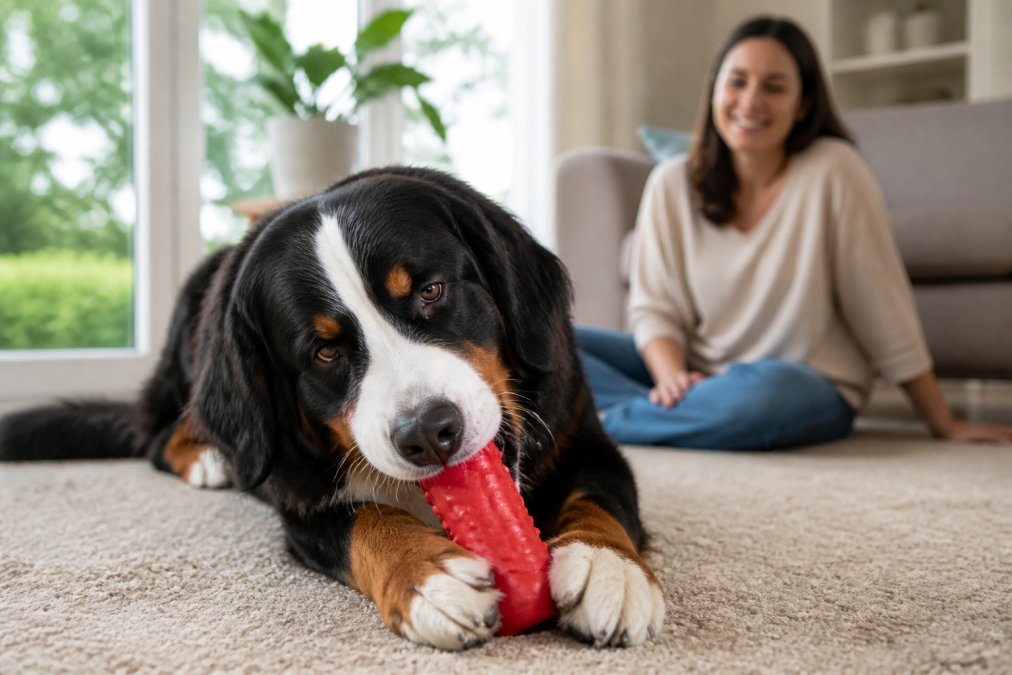
Sausage-Shaped Pet Chew Toys
Made from non-toxic, bite-resistant silicone, this squeaky sausage toy is designed for daily play. It comes in two sizes, 8.6 inches and 23.6 inches, so both small and large dogs get a proper fit. The textured surface supports dental health and helps reduce anxiety and boredom.
Chew-Resistant Burst Ball Dog Toy
Built from durable ETPU, this ball suits energetic pets and works for both dogs and cats. It comes in three sizes (1.9, 2.4, and 2.7 inches) and weighs just 40 grams, so it's easy to toss and carry. The bright orange color makes it easy to spot in grass or under furniture.
Rope Tug Toy
The textured rope surface helps clean teeth and massage gums during play. It works for solo play or tug-of-war and suits dogs and cats of any size.
How to Choose Durable Toys for Pets: A Buyer's Guide
Choosing durable toys for pets comes down to matching material and construction to your pet's chewing style. A toy that's too soft gets shredded; one that's too hard can damage teeth.
- Identify chew strength. Light chewers do fine with plush and rope. Power chewers need dense silicone, ETPU, or heavy nylon.
- Check the material. Non-toxic silicone and ETPU resist tearing better than thin rubber.
- Match the size. A toy too small is a choking hazard; one too large is ignored.
- Look for reinforced seams. Weak stitching is the first thing to fail.
- Confirm the play style. Fetch toys need bounce; chew toys need density.
Pet Toy Safety Standards: What to Look For
Pet toy safety standards in the U.S. are not as strict as child toy rules, so the burden of judgment falls on you. The Consumer Product Safety Commission guidance on pet products notes that pet toys are largely unregulated compared to children's products, which means there is no federal seal that guarantees a toy is safe for your specific animal.
A 60-Second Weekly Inspection Routine
Run this check on every toy in rotation once a week. It takes about a minute per toy and catches the failure points behind most emergency vet visits.
- Squeaker test. Press the toy firmly. If the squeaker shifts, feels loose, or the outer fabric has thinned over it, retire the toy. Exposed squeakers are the most common swallowed object in chew-toy incidents.
- Seam pull. Grip both sides of every seam and tug. If stitching separates or the thread frays, the toy is one chew session from coming apart.
- Rope strand check. For rope toys, look for strands that have pulled loose from the main braid. A single loose strand can wrap around a tooth or be swallowed whole.
- Material fatigue scan. Bend rubber and silicone toys. Cracks that appear when flexed, even hairline ones, mean the polymer is breaking down and can shear off in chunks.
- Size re-check. Puppies grow fast. A toy that was appropriately sized at eight weeks can become a choking hazard by sixteen weeks.
Age-Specific Safety Risks
Safety risk changes with life stage, and most generic guides flatten this into one list.
- Puppies (under 12 months). Teething puppies gnaw to relieve gum pressure, chewing harder and longer than adults on the same toy. Choose toys soft enough to flex against new teeth but dense enough that small pieces do not shear off. Avoid hard nylon until adult teeth are set, around seven to eight months.
- Adult dogs. The main risks are size mismatch and material fatigue. A toy that is too small for a strong jaw can be swallowed; a toy that is too hard can fracture a carnassial tooth.
- Senior dogs. Dental wear and gum recession make hard toys riskier. Look for softer silicone or fabric options that still resist tearing, and inspect more often because older dogs chew more gently but for longer stretches.
Material Red Flags
Not every label tells you what you need. A few patterns are worth treating as caution signs:
- Unlabeled "rubber." Natural and synthetic rubber behave very differently under a dog's jaw. If the listing does not specify the material, assume it is the cheapest option.
- Strong chemical odor out of the package. A persistent plastic or solvent smell often indicates residual manufacturing compounds. Air the toy out for several days, and if the smell lingers, return it.
- Paint or printed graphics on chew surfaces. Decorative coatings can flake. Prefer toys where the color is part of the material, not applied on top.
- Detachable parts. Eyes, bells, tags, and small appendages are the first things a determined chewer removes. If it can be pulled off by hand, it can be pulled off by a jaw.
What "Non-Toxic" Actually Means on a Label
"Non-toxic" is a marketing term, not a regulated certification for pet toys. Look for the underlying specifics: food-grade silicone, medical-grade silicone, or a named polymer such as ETPU. Those designations carry manufacturing standards behind them. A vague "non-toxic" claim with no material name is a claim, not a guarantee.
Sausage-Shaped Pet Chew Toys →
Interactive and Puzzle Toys for Mental Stimulation
Most guides tell you puzzle toys fight boredom. That is true but incomplete. The more useful question is why a dog destroys toys in the first place, because the answer determines which interactive toy will help.
Why Dogs Destroy Toys: The Behavioral Layer
Destructive chewing is rarely about the toy. It is usually about an unmet need. Four patterns account for most of it:
- Boredom. A dog with nothing to do will manufacture a job, and shredding a toy is a satisfying one. Boredom-driven destruction tends to happen when the dog is alone or during predictable lulls in the routine.
- Anxiety and separation distress. Anxious dogs often chew to self-soothe. The destruction is usually concentrated near exits, doorways, or items that carry your scent, and escalates when you leave.
- Teething. Puppies between roughly three and eight months chew to relieve gum pressure. This is developmental, not behavioral, and it resolves with age if the dog has appropriate outlets.
- Under-stimulation of the mind, not the body. A dog that gets a long walk but no problem-solving still has energy left over. Mental fatigue settles a dog more completely than physical fatigue alone.
Matching the Toy to the Cause
| Underlying Cause | Best Interactive Toy Type | Why It Works |
|---|---|---|
| Boredom | Treat-dispensing puzzle, snuffle mat | Turns a passive object into a task with a reward |
| Anxiety | Long-lasting chew with a calming texture | Provides a repetitive, self-soothing outlet |
| Teething | Soft-but-dense silicone chew | Relieves gum pressure without shearing |
| Mental under-stimulation | Multi-step puzzle, hide-and-seek toy | Requires problem-solving, not just motion |
A Difficulty Progression That Actually Works
Puzzle toys fail when they are too easy or too hard. Too easy and the dog solves it in thirty seconds and loses interest. Too hard and the dog gives up and goes back to the couch leg.
- Week one, open access. Treats sit on top of the toy or in a wide, shallow channel. The dog learns the toy pays out.
- Week two, covered access. Treats go under a flap or inside a snuffle fold. The dog has to nose or paw them out.
- Week three, multi-step. The dog must slide, lift, or roll a component before reaching the reward.
- Week four and beyond, rotate. Swap between two or three puzzles so the dog does not memorize the solution and lose interest.
Age-Specific Enrichment
The same puzzle does not fit every life stage.
- Puppies. Short sessions, easy puzzles, and soft chews. Puppy attention spans are brief, so five to ten minutes twice a day beats one long session.
- Adult dogs. This is where multi-step puzzles and treat-dispensing toys earn their keep. Aim for one or two structured enrichment sessions per day plus physical exercise.
- Senior dogs. Cognitive enrichment still matters, but physical difficulty should drop. Nose-work games and snuffle mats let older dogs engage mentally without the mobility a rolling puzzle demands.
Interactive Toys and the Rotation Principle
No single toy holds a dog's attention indefinitely. The most effective pattern is rotation: keep three to five interactive toys in circulation and swap which ones are available every few days. A toy out of sight for a week feels new when it reappears, stretching your investment.
Materials That Make Pet Toys Truly Durable
The materials behind durable pet toys determine how long they last. Silicone resists tearing and stays gentle on gums. ETPU is lightweight yet tough, which is why it shows up in chew-resistant balls. Nylon and heavy rope handle tugging and dental wear.
Plush vs. Rubber: Durability Comparison
Plush toys win on comfort and cuddling; rubber and silicone offer more longevity. For a hard chewer, plush toys may not last as long as rubber compounds: soft toys comfort, while more durable options endure.
| Feature | Plush | Rubber/Silicone |
|---|---|---|
| Durability | Low | High |
| Best for | Cuddling, light chewers | Aggressive chewers |
| Dental benefit | Minimal | Moderate to high |
| Tear resistance | Low | High |
Frequently Asked Questions
What materials make pet toys truly durable?
Durable pet toys are typically made from materials like silicone, ETPU, nylon, and reinforced ropes. For example, The Pet Botique's Sausage-Shaped Pet Chew Toys use bite-resistant silicone, while the Chew-Resistant Burst Ball Dog Toy is made from ETPU. These materials offer more resistance to tearing than standard plush. When shopping for durable pet toys online, check the product description for specific materials and durability claims.
How do I choose the right size toy for my pet?
Match the toy size to your pet's breed and chewing style. Small pets need toys they can easily carry, like the Mini Chew-Resistant Burst Ball (5cm). Medium to large dogs benefit from bigger options such as the Interactive Dog Soccer Ball, designed for bigger breeds. Always supervise play to prevent choking hazards. If you're unsure, err on the side of a larger toy, as small toys can be swallowed. The Pet Botique offers detailed sizing in each product listing to help you decide.
Are there safety standards for pet toys in the United States?
Yes, while there is no single government agency solely dedicated to pet toy safety, the U.S. Consumer Product Safety Commission (CPSC) can act on hazardous pet products. Look for non-toxic materials, avoid small parts that can break off, and check for choking hazards. The Pet Botique's toys are made from non-toxic materials, such as the Sausage-Shaped Pet Chew Toys.
What are the best indestructible toy brands for aggressive chewers?
For aggressive chewers, look for toys made from tough materials like ETPU, nylon, or reinforced rubber. The Pet Botique's Chew-Resistant Burst Ball Dog Toy, made from durable ETPU, is designed to withstand enthusiastic chewers. The Sausage-Shaped Pet Chew Toys are also bite-resistant and non-toxic. When buying durable pet toys online, read reviews and product specs to ensure they match your dog's chewing intensity. Always supervise and replace toys at the first sign of wear.
How can I tell if a pet toy is safe for my dog?
Check for non-toxic materials, avoid toys with small parts that can detach, and ensure there are no sharp edges. Look for toys that are size-appropriate for your dog to prevent choking hazards. The Pet Botique's toys, like the Dog Snuffle Toy, are made from safe materials and are designed for supervised play. Regularly inspect toys for wear and tear, and replace them when damaged. If a toy has a squeaker, ensure it's securely enclosed.
Picking the right toy is really about matching material and play style to your pet, and that takes a little trial and error. The Pet Botique makes it easier with durable, non-toxic picks like our silicone sausage chew toys and chew-resistant burst balls, plus free shipping on orders over $65 and 10% off when you buy any two items. Get started with The Pet Botique and give your pet toys that actually last.


