


 support@thepetbotique.com
Table of Contents
- Understand Why Your Puppy Is Destructive
- Puppy-Proof Your Home Before Damage Happens
- Best Interactive Toys for Destructive Puppies
- Puppy Crate Training for Behavior Management
- Puppy Chewing Redirection Techniques That Work
- Physical Exercise and Mental Stimulation Requirements
- When to Rule Out Medical Issues
- Conclusion
- Frequently Asked Questions
Last Updated: September 4, 2026
Understand Why Your Puppy Is Destructive
Destructive puppy behavior is not an act of spite; it is a symptom of an unmet need. Before you can stop destructive puppy behavior, you must identify which need your puppy is trying to satisfy. Most destructive chewing stems from one of three root causes: physical discomfort from teething, a lack of appropriate outlets for energy, or genuine distress. Punishing a puppy for chewing without understanding the trigger teaches fear, not boundaries, and it damages the trust your training depends on.
The good news is that nearly all destructive behavior is temporary and manageable. Puppies explore the world with their mouths the way human infants do, and their baby teeth begin to loosen and fall out around twelve weeks of age. The key is to respond with structure and patience rather than frustration. Below, we will walk through a practical framework that addresses the physical, environmental, and emotional drivers of chewing, so you can protect your furniture and raise a confident, well-adjusted dog.
Teething vs. Boredom: Know the Difference
The single most useful diagnostic question is whether your puppy is teething or bored. Teething produces a specific, physical need to gnaw on firm surfaces to relieve gum pressure. Boredom, by contrast, is a behavioral issue rooted in under-stimulation. A teething puppy will chew on almost anything hard, including table legs and baseboards, but will often settle after a focused chewing session. A bored puppy chews as a way to generate activity, frequently targeting items that smell like you, such as shoes or remote controls, because those objects carry comfort and novelty.
Watch the timing of the behavior. If destruction happens shortly after meals or when your puppy is settling down for a nap, teething is the likely culprit. If it happens mid-afternoon when your puppy has been resting all day, boredom is a stronger bet. This distinction matters because the fixes are entirely different. Teething calls for cold, safe chew toys that numb the gums. Boredom calls for more exercise, training games, and interactive enrichment that tire the mind.
Separation Anxiety and Nighttime Destruction
Destruction that only happens when you are gone points to separation anxiety, not naughtiness. Puppies are pack animals, and being left alone triggers a genuine panic response that manifests as frantic chewing, scratching at doors, and sometimes indoor accidents. Nighttime destruction follows a similar pattern. A puppy who cries, paces, and chews at night is often struggling to self-soothe without their littermates.
For separation anxiety, the fix is gradual desensitization. Practice short departures of just a few minutes, then slowly extend the time. Always leave your puppy with a high-value distraction, like a stuffed toy or a puzzle feeder, so they associate your absence with something positive. For nighttime issues, establish a consistent bedtime routine that includes a final potty break, a calming play session, and a comfortable crate placed near your bed. The proximity reassures your puppy that they are not alone.
Breed-Specific Destructive Tendencies
Genetics play a larger role in destructive chewing than most guides acknowledge. Herding breeds like Australian Shepherds and Border Collies are prone to nipping and herding behaviors that can become destructive without a job to do. Sporting breeds like Labradors and Golden Retrievers have strong retrieving instincts and will happily shred soft items. Terriers were bred to hunt and dig, which translates to a powerful urge to tear and burrow. Knowing your puppy's breed profile helps you predict the type of destruction you will face and choose toys that satisfy that specific instinct.
A high-energy working breed needs more than a generic bone; they need a task. A terrier needs a toy that allows digging and tearing, like a snuffle mat or a treat-dispensing puzzle. A retriever needs something to fetch and carry. Matching the toy to the instinct is the difference between a toy that gets ignored and one that becomes a daily obsession.
Puppy-Proof Your Home Before Damage Happens
Puppy-proofing is the foundation of every successful behavior plan because it removes the opportunity for failure. Walk through each room at puppy eye level and remove or secure anything they could reach. This means moving shoes into closets, lifting electrical cords out of reach, and using baby gates to block off rooms where you cannot supervise. Management is not a substitute for training, but it prevents bad habits from forming while you teach your puppy the rules.
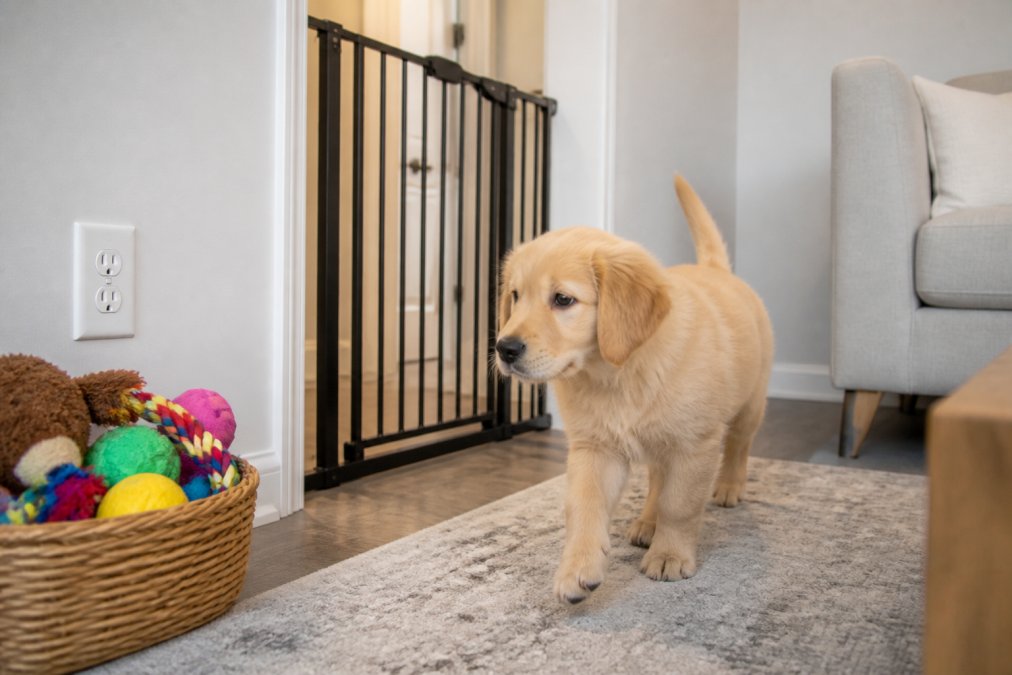
The goal is to create a safe zone where your puppy can roam freely without you hovering. A foldable pet safety gate is an essential tool for this. It lets you confine your puppy to a puppy-proofed area, like the kitchen or a section of the living room, while you cook, work, or simply need a break. This supervised freedom builds confidence and gives your puppy practice making good choices. The Black Foldable Protection Pet Safety Gate from The Pet Botique is lightweight, durable, and easy to set up or store away, making it simple to rotate which rooms are accessible.

Best Interactive Toys for Destructive Puppies
The best interactive toys for destructive puppies are those that match their chewing style and energy level. A toy that is too soft will be shredded in minutes, while a toy that is too hard may damage your puppy's developing teeth. Look for toys that offer a challenge, like puzzle feeders that require your puppy to work for treats, and durable materials that can withstand determined gnawing. The goal is to redirect the chewing impulse onto an appropriate target that provides more satisfaction than your furniture.
The Dog Snuffle Toy is an excellent choice for puppies that need mental stimulation. This puzzle plush dumbbell toy is crafted from soft, durable pineapple fleece fabric and engages your dog's natural hunting instincts. Hide treats inside and watch your puppy use their nose and paws to search them out. This type of foraging activity is deeply satisfying and can tire a puppy out faster than a long walk. For puppies that crave movement and sound, the Squeaky Dog Toy offers interactive play with squeaky sounds, playful bouncing, and shaking motions that capture attention and encourage exercise.


| Toy Type | Best For | How It Helps | Example |
|---|---|---|---|
| Snuffle/Puzzle Toy | Foragers, nervous chewers | Mental stimulation, slows eating | Dog Snuffle Toy |
| Squeaky Toy | Active, playful puppies | Encourages exercise, satisfies prey drive | Squeaky Dog Toy |
| Durable Chew Bone | Aggressive teething chewers | Soothes gums, satisfies gnawing urge | Rubber or nylon chew |
Puppy Crate Training for Behavior Management
Puppy crate training for behavior management works because it taps into a dog's natural denning instinct. A crate is not a prison; it is a safe, quiet space where your puppy can relax without the pressure to entertain themselves. When used correctly, the crate prevents destructive behavior by removing access to your home while you cannot supervise, and it accelerates housebreaking by teaching your puppy to hold their bladder.
Start by making the crate a positive place. Feed your puppy their meals inside the crate with the door open, toss treats in randomly throughout the day, and never use the crate as a punishment. Once your puppy is comfortable, begin closing the door for short periods while you stay in the room. Gradually increase the duration and distance until your puppy can settle in the crate while you are in another room. The crate should be sized so your puppy can stand, turn around, and lie down comfortably, but not so large that they can use one corner as a bathroom. A common mistake is expecting a puppy to sleep through the night in a crate before they have the bladder control to do so, which leads to accidents and a negative association with the space.
Puppy Chewing Redirection Techniques That Work
Puppy chewing redirection techniques are the core of positive reinforcement training. The method is simple: whenever you catch your puppy chewing something they should not, calmly say "no" or "leave it," then immediately offer them an acceptable chew toy and praise them enthusiastically when they take it. This teaches your puppy that chewing is fine, but the target of that chewing matters. Consistency is everything. Every family member must follow the same protocol, or your puppy will learn that the rules change depending on who is watching.
Redirection works best when paired with impulse control exercises. Practice a "trade" game where you offer a high-value treat in exchange for whatever your puppy has in their mouth. This prevents resource guarding and teaches your puppy that giving things up leads to better rewards. Avoid chasing your puppy when they grab something forbidden, as this turns the interaction into a game. Instead, call them to you with a happy voice or offer a treat, then remove the item calmly.
Physical Exercise and Mental Stimulation Requirements
A tired puppy is a well-behaved puppy. Physical exercise burns energy, but mental stimulation is what actually prevents destructive boredom. A puppy needs roughly five minutes of structured exercise per month of age, twice a day. A four-month-old puppy needs about twenty minutes of activity, twice daily. This can include walks, fetch, or supervised play in a secure yard. However, physical exercise alone is rarely enough. Mental stimulation, through training sessions, puzzle toys, and scent games, is often more exhausting than physical activity because it requires focus and problem-solving.
Incorporate short training sessions of five to ten minutes, several times a day. Teach basic cues like sit, stay, and down, then move to more complex behaviors like leave it and settle. Use meal times as an opportunity for enrichment by feeding your puppy from a puzzle feeder or snuffle mat instead of a bowl. This turns a routine activity into a mental workout. An under-stimulated puppy will find their own entertainment, and you will not like their choices.
When to Rule Out Medical Issues
If destructive behavior appears suddenly in an adult dog, or if your puppy's chewing becomes frantic and uncontrollable despite your best efforts, a medical assessment is warranted. Persistent chewing can be a sign of gastrointestinal issues, dental pain, or nutritional deficiencies. Some dogs develop pica, a condition characterized by the compulsive eating of non-food items, which requires veterinary intervention. Sudden destructiveness can also signal the onset of a neurological issue or a reaction to a new medication.
Schedule a vet consultation if the behavior is accompanied by other symptoms like lethargy, changes in appetite, vomiting, or excessive drooling. Your veterinarian can rule out underlying health problems and recommend a behaviorist if needed. It is also worth noting that some destructive behavior is a normal phase of puppy development that resolves with age and consistent training. The American Veterinary Medical Association offers resources on puppy behavior and development that can help you distinguish between a phase and a problem. Trust your instincts. If something feels off, a professional opinion provides peace of mind and a clearer path forward.
Conclusion
Stopping destructive puppy behavior is a process of elimination, not a single magic fix. You must rule out medical issues, meet your puppy's physical and mental needs, and manage their environment so they cannot practice unwanted habits. The strategies we covered, from puppy-proofing and crate training to redirection and breed-specific enrichment, work together to address the root cause of the behavior rather than just the symptoms. Patience and consistency are your greatest tools, and the effort you invest now will pay off in a lifetime of trust and companionship.
The right supplies make this process significantly easier. The Pet Botique offers a curated selection of durable interactive toys, safety gates, and enrichment tools designed to keep your puppy engaged and your home intact. Save 10% when you buy any two items, and enjoy free shipping on all orders over $65. Get started with The Pet Botique and turn your destructive chewer into a happy, well-adjusted companion.
Frequently Asked Questions
At what age do puppies stop being destructive?
Most puppies begin to outgrow destructive chewing between 6 and 12 months, though it can extend into adolescence (12-18 months) depending on breed and individual development. Large breeds may remain destructive longer than small breeds. Consistency with training, adequate exercise, and mental stimulation significantly speed up the transition. Teething, which peaks around 3-6 months, accounts for much of the early destruction, once adult teeth fully emerge, destructive chewing often naturally decreases if boredom and anxiety are also managed.
How do I redirect my puppy's destructive energy?
Redirect by interrupting destructive behavior and immediately offering an approved alternative like a chew toy or snuffle toy. Use positive reinforcement: praise and reward when your puppy chooses the right toy. For persistent chewing, deter access to forbidden items using baby gates or confinement, then reward engagement with appropriate toys. Consistency is critical, every family member must redirect the same way. Interactive toys like puzzle toys and snuffle toys channel destructive impulses into enrichment activities, turning energy into mental engagement rather than property damage.
Is destructive behavior in puppies a sign of anxiety?
Destructive behavior can signal anxiety, but it's often just normal development. Separation anxiety typically shows as destruction focused on exit points (doors, windows) or occurs only when left alone. Teething, boredom, and under-stimulation cause broader destruction. Medical issues like parasites or digestive problems can also drive destructive chewing. To distinguish: anxious puppies often pace, whine, or show panic when you leave; bored puppies destroy throughout the day regardless of your presence. If you suspect anxiety, consult your veterinarian to rule out medical causes and discuss behavior modification strategies tailored to your puppy's age and breed.
What's the best way to choose durable toys that won't fall apart?
Look for toys made from reinforced materials designed to withstand aggressive chewing. Snuffle toys and puzzle toys with sturdy construction hold up better than thin plush toys. Interactive toys that engage your puppy's mind often get less destructive treatment because the puppy is focused on the enrichment activity rather than tearing the toy apart. Check product reviews and descriptions for durability claims. The Pet Botique's Dog Snuffle Toy and Squeaky Dog Toy are built for engagement and durability, keeping your puppy entertained without constant replacement.


