


 support@thepetbotique.com
Table of Contents
- Quick Comparison: Top Dog Beds for Small Apartments
- 1. 25" Semi Enclosed Pet Bed: Best for Cozy Burrowers
- 2. Comfortable Semi-enclosed Cat Nest: Best for Curlers
- 3. Cozy Cat Bed: Best for Style and Warmth
- Orthopedic Dog Beds for Apartments: Joint Support in Tight Spaces
- How to Choose the Right Size Dog Bed for Your Apartment
- Washable Dog Beds for Small Dogs: Easy Maintenance
- Frequently Asked Questions
Last Updated: September 13, 2026
Quick Comparison: Top Dog Beds for Small Apartments
Finding comfortable dog beds for small apartments comes down to one thing: a bed that fits your pet's sleeping style without eating your floor space. The three beds below range from a 21-inch semi-enclosed nest to a 25-inch plush cave, and each solves a different apartment problem.
This guide covers what actually matters when you're short on square footage: footprint, washability, joint support, and whether your dog curls, burrows, or sprawls. Below, we'll show you exactly how to match a bed to your pet's habits, plus the sizing and maintenance details most product pages skip.
| Bed | Price | Size | Best For |
|---|---|---|---|
| 25" Semi Enclosed Pet Bed | $35.00 | 25 x 25 x 19 in | Burrowers and cave sleepers |
| Comfortable Semi-enclosed Cat Nest | $44.99 | 21 x 21 x 15 in | Curlers and anxious pets |
| Cozy Cat Bed | $89.99 | Lightweight at 1.61 kg | Style-focused, warmth-seeking pets |
1. 25" Semi Enclosed Pet Bed: Best for Cozy Burrowers
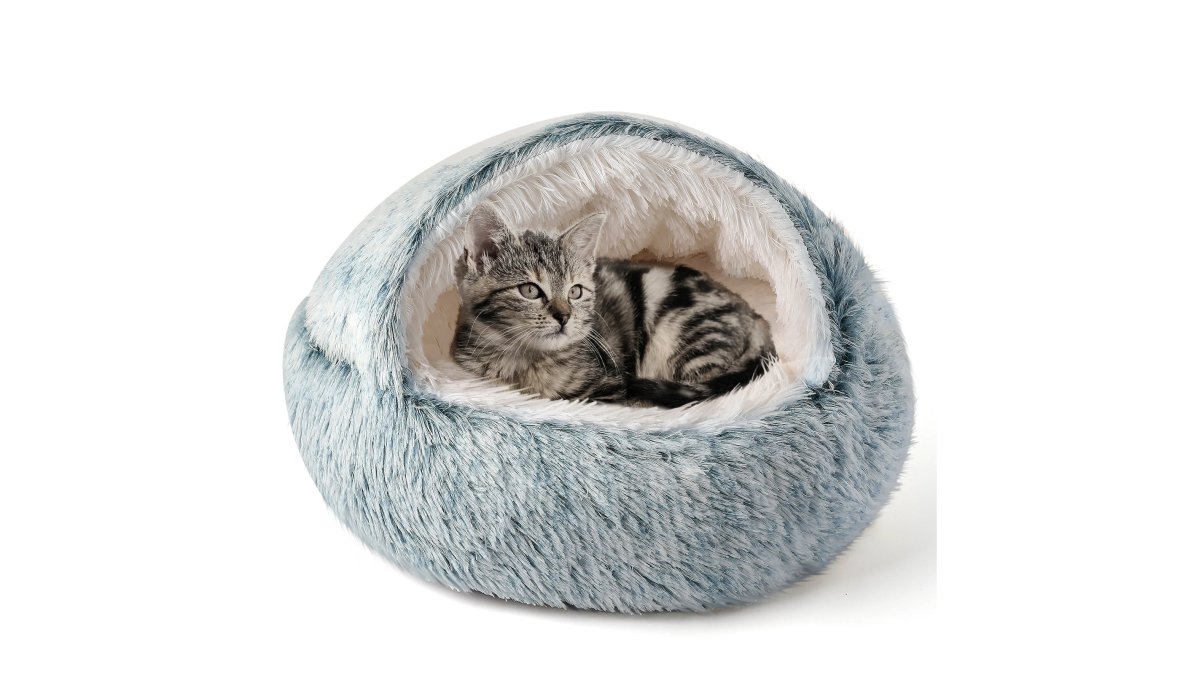
The 25" Semi Enclosed Pet Bed is the best pick for dogs that burrow. Its semi-enclosed cave design creates a warm, snug hideaway, and the plush faux fur interior gives small dogs the cocoon feel they instinctively seek.

The non-slip bottom keeps it stable on hardwood and tile, which matters in apartments where beds slide across smooth floors. At 25 x 25 x 19 inches, it fits neatly in a living room corner or beside a sofa without blocking walkways.
Pros and Cons
Pros:
- Lowest price of the three at $35.00
- Semi-enclosed shape suits burrowers and cave sleepers
- Non-slip bottom stays put on smooth apartment floors
Cons:
- Largest footprint of the three, so it needs a dedicated corner
- The deep cave shape won't suit dogs that prefer to sprawl flat
2. Comfortable Semi-enclosed Cat Nest: Best for Curlers
The Comfortable Semi-enclosed Cat Nest is the best choice for pets that curl into a tight ball. The semi-enclosed shape offers warmth, privacy, and a secure feeling, which helps anxious or shy animals settle faster.

Its 21 x 21 x 15-inch footprint is the smallest here, making it the easiest to tuck under a side table or beside a desk. The plush faux fur interior and cotton lining keep it soft against pressure points during long naps.
Pros and Cons
Pros:
- Smallest footprint, ideal for tight apartment layouts
- Enclosed design calms anxious or shy pets
- Soft faux fur and cotton interior
Cons:
- Pricier than the 25-inch bed at $44.99
- Too small for dogs that stretch out rather than curl
3. Cozy Cat Bed: Best for Style and Warmth
The Cozy Cat Bed is the best option when you want a bed that looks like furniture. Its striped sofa design adds a stylish touch to your decor, so it reads as part of the room rather than a pet accessory shoved into a corner.

Built from polyester with soft PP cotton filling, it's designed to keep pets warm during colder months. At just 1.61 kg, it's light enough to move from room to room, and it suits both cats and small dogs.
Pros and Cons
Pros:
- Aesthetic design that fits apartment decor
- Lightweight and portable at 1.61 kg
- Warm PP cotton fill for cold-weather comfort
Cons:
- Highest price at $89.99
- Flat sofa shape offers less enclosure than the cave styles
Orthopedic Dog Beds for Apartments: Joint Support in Tight Spaces
Orthopedic dog beds for apartments prioritize cushioning density over sheer size. High-density foam distributes weight across pressure points, which matters for older dogs and toy breeds prone to joint stiffness (avma.org). But in a small apartment, the orthopedic question is not just "how thick is the foam", it is "where does a supportive bed physically fit, and does it stay supportive in that spot."
Why apartment placement changes orthopedic performance
A bed that performs well in a spacious home can underperform in a tight layout for three reasons:
- Hard flooring exposure. Apartments are typically wall-to-wall hardwood, tile, or laminate. A thin or soft-filled bed compresses against a hard surface and offers almost no give, so the dog's elbows and hips absorb the impact. A bed with a firm base layer plus a plush top layer cushions better on hard floors than a thick-but-soft bed that bottoms out.
- Drafty microclimates. Beds pushed against exterior walls, under windows, or beside entry doors sit in the coldest, draftiest zones of an apartment. Cold joints stiffen. A semi-enclosed or bolster style that traps warmth helps an arthritic dog more than an open flat mat in the same corner.
- Traffic and repositioning. In a small space, a bed often gets nudged, folded, or moved. A bed with a non-slip base holds its shape and position; a bed that slides or bunches loses the flat, supportive surface the foam was designed to provide.
What to look for in the foam
Look for firm, high-density foam or tightly packed filling rather than loose stuffing that flattens within weeks. A useful rule of thumb: the base layer should feel firm and springy, and the top layer should feel plush. If the whole bed feels uniformly soft, it will compress to the floor under a dog's weight.
For senior dogs and toy breeds, a bed with a low entry height matters too. A deep cave that requires stepping up and over a wall can be hard on stiff joints. A semi-enclosed bed with a lower front lip gives the same sense of security without the climb.
Matching orthopedic support to sleep style
- Curlers and burrowers: A semi-enclosed nest with a firm base and plush interior supports joints while giving the warmth and enclosure that anxious or cold-sensitive dogs seek.
- Sprawlers: A flatter orthopedic mat with a non-slip base lets a dog stretch out fully without the bed sliding across smooth floors.
- Senior dogs: Prioritize a firm base layer, low entry height, and a spot away from exterior walls and doorways.
How to Choose the Right Size Dog Bed for Your Apartment
Choosing the right size dog bed starts with measuring your dog while it sleeps, not while it stands. A curled sleeper needs a bed roughly the length of its body; a sprawler needs one up to a third larger (akc.org). Then check the floor footprint against your actual space. A 25-inch bed needs a clear 25-inch square that won't block a doorway or walkway.
That is the standard advice. What most guides skip is that in a small apartment, the bed's footprint is only one of three dimensions that matter. The other two are vertical space and multi-functional use.
Measure the dog, then measure the room
- Curlers: A 21-inch nest is usually enough.
- Burrowers: Choose an enclosed cave with walls.
- Sprawlers: Size up and pick a flatter style.
- Senior dogs: Prioritize firm cushioning and low entry height over size.
Measure the spot first, then match the bed to it. Buying the bed first and hunting for space later is how apartments end up cluttered.
Use vertical space, not just floor space
In a tight layout, the floor is the scarcest resource. Two apartment-specific moves help:
- Elevated or raised beds. A bed on a low frame frees the floor beneath it for storage bins, shoes, or a food bowl, and it lifts a small dog out of cold drafts that pool at floor level (energy.gov). Measure the clearance under the frame before buying, you want enough room to slide a storage bin or vacuum underneath.
- Bunk-style or stacked pet furniture. A two-level pet bed or a bed with a built-in shelf uses the same footprint for two purposes. This is rare in the current market, so check dimensions carefully and confirm the upper level is stable and the lower level is tall enough for your dog to stand.
Choose a bed that doubles as furniture
Most guides treat dog beds as standalone objects. In a small apartment, the best bed is often one that does a second job:
- Ottoman or side-table beds. A bed with a flat, firm top and a structured frame can sit at the end of a sofa or beside a chair and hold a lamp, a book, or a drink. The dog sleeps inside or on top; you get a surface you would have bought anyway.
- Bench or window-seat beds. A low, rectangular bed that fits under a window or along a wall reads as a bench rather than a pet accessory.
- Under-desk or under-table beds. A 21-inch nest tucks under a side table or desk, turning dead space into a sleeping spot.
When you shop for a multi-functional bed, check two things: the top surface must be firm enough to hold a lamp or a cup without sagging, and the interior must still be soft enough for the dog. A bed that is too firm on top is usually too firm inside.
Match the bed to your apartment's noise and temperature
Apartment layouts create microclimates and noise zones that affect where a dog will actually sleep:
- Drafty zones: Exterior walls, windows, and entry doors are the coldest spots. A semi-enclosed or bolster bed in these areas traps warmth; an open flat mat does not.
- Noisy zones: Hallways, elevator walls, and shared walls carry foot traffic and plumbing noise. A bed with higher walls or a cave shape gives a small dog a sense of cover and can help anxious dogs settle.
- Warm zones: Near radiators, baseboard heaters, or south-facing windows, a flat, breathable bed with a cotton or mesh cover stays cooler than a plush cave.
A practical approach: pick two candidate spots, watch where your dog already chooses to nap, and put the bed there. Dogs vote with their paws, and their choice usually reflects the temperature and noise conditions better than a floor plan does.
Washable Dog Beds for Small Dogs: Easy Maintenance
Washable dog beds for small dogs should have removable covers or materials that survive regular cleaning without clumping. In a small apartment, a bed that traps odor and dander becomes a problem fast because there's less air circulation than in a larger home.
Rotate the bed's position weekly and vacuum the surface between washes. For beds with removable covers, check the closure before washing so the filling stays put. Air-dry rather than machine-dry to protect faux fur and foam from heat damage.
That's the maintenance routine that keeps a bed fresh in a tight space. Skip it and the bed becomes the source of the smell you're trying to avoid.
Frequently Asked Questions
What features should I look for in a dog bed for a small apartment?
Focus on space-saving designs like semi-enclosed nests or bolster beds that fit in corners. Look for a non-slip base to protect floors, machine-washable covers for easy cleaning, and durable materials like faux fur or high-density foam. A bed with a small floor footprint and a cozy, secure shape helps pets feel safe in compact living areas.
How do I choose the right size dog bed for my small dog?
Measure your dog from nose to tail and add 6 to 12 inches for stretching room. For apartment living, a bed that is slightly larger than your pet's curled-up size works well. The 25-inch Semi Enclosed Pet Bed suits toy breeds, while the 21-inch Cat Nest fits cats and the smallest dogs. Always check the bed's dimensions against your available floor space.
Are washable dog beds for small dogs worth it?
Yes. Washable beds save time and keep your apartment smelling fresh. Look for removable covers or beds that can go into the washing machine. The Semi Enclosed Pet Bed and the Cat Nest use soft, easy-to-clean materials. Regular washing removes dander, dirt, and odors, which matters more in small spaces where air circulation is limited.
Can I use an orthopedic dog bed for my apartment?
Orthopedic dog beds for apartments are a smart choice for older dogs or breeds prone to joint issues. These beds use memory foam or high-density foam to cushion pressure points. Even in a small space, a compact orthopedic bed can fit under a desk or beside a sofa. Check the bed's height and footprint to ensure it doesn't block walkways.
How do I clean a dog bed in a small apartment?
Shake off loose hair and debris outside or over a trash can. If the cover is removable, machine wash it on a gentle cycle with pet-safe detergent, then air dry. For beds without removable covers, spot clean with a damp cloth and mild soap. In apartments without a yard, use a lint roller or vacuum attachment to keep the bed fresh between washes.
Picking the right bed for a small apartment is a balance between your pet's sleeping style and the space you actually have. The Pet Botique carries all three beds in this guide, from the $35.00 burrower-friendly cave to the decor-friendly Cozy Cat Bed. Buy any two items and save 10%, and orders over $65 ship free, so pairing a bed with a matching blanket or toy is the simplest way to hit both. Get started with The Pet Botique and give your pet a comfortable spot that fits your home.


